Marine Phytoplankton Bioavailability Explained
As interest in marine phytoplankton continues to grow, more discussions are emerging around nutrient density, absorption, digestion, and bioavailability.
Marine phytoplankton naturally contains chlorophyll, EPA omega-3 fatty acids, amino acids, carotenoids, antioxidants, vitamins, and trace minerals. However, many researchers and wellness-focused consumers also ask an important question:
How bioavailable are these nutrients?
This article explores marine phytoplankton bioavailability, nutrient absorption, microalgae structure, digestion, and why bioavailability matters in marine nutrition science.
What Is Bioavailability?
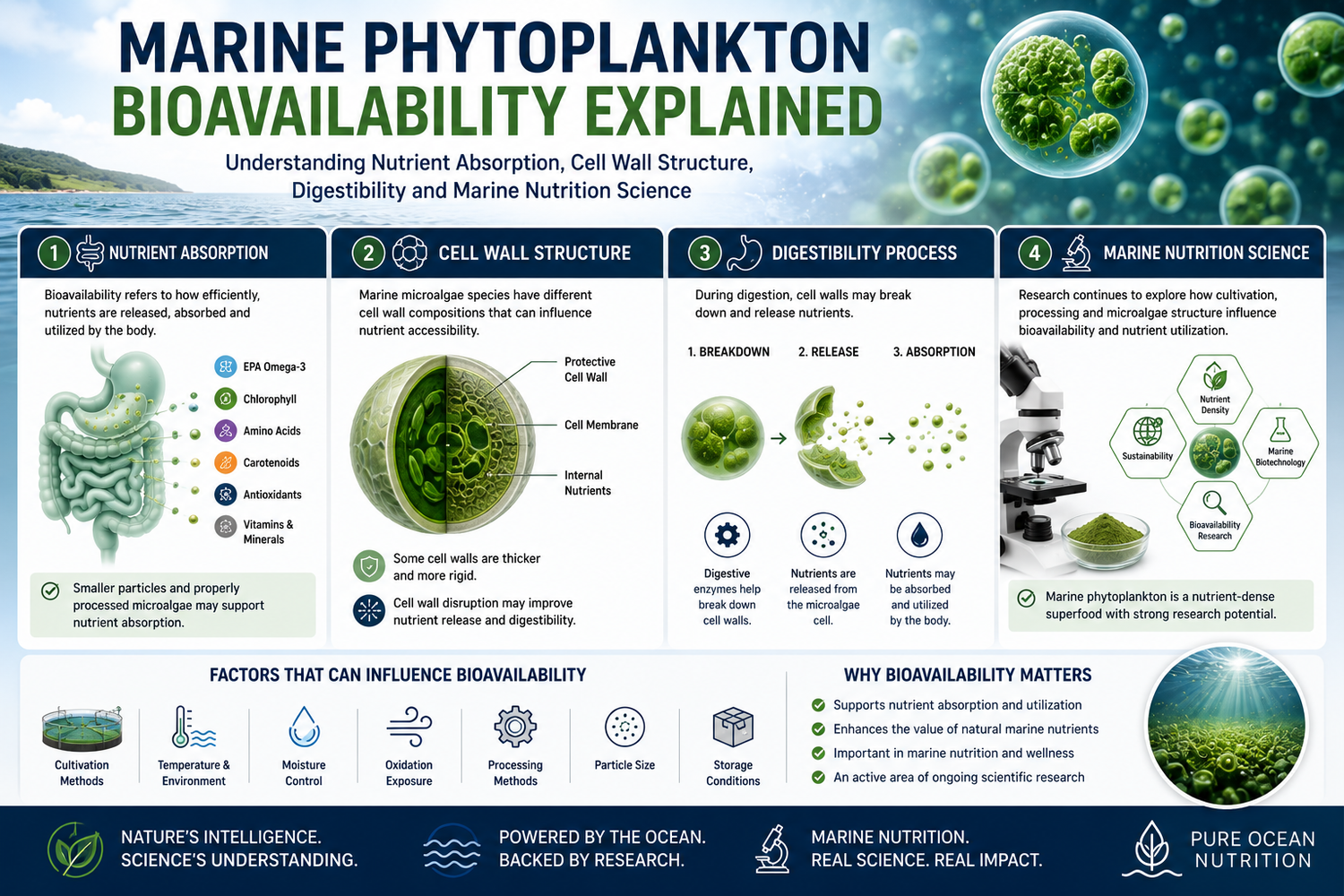
Bioavailability generally refers to how efficiently nutrients can be absorbed and utilized by the body.
In nutrition science, nutrient content alone is not always the only consideration. Researchers also study how nutrients are released, absorbed, transported, and metabolized.
Factors that may influence bioavailability include:
- Digestibility
- Particle size
- Cell wall structure
- Processing methods
- Moisture exposure
- Oxidation
- Nutrient stability
You may also enjoy:
- Why Marine Phytoplankton Quality Varies So Much
- How Marine Phytoplankton Is Cultivated
- Marine Phytoplankton Nutrition Breakdown
- What Experts Say About Marine Phytoplankton and Nannochloropsis
Marine Microalgae Structure
Marine phytoplankton are microscopic marine organisms with highly specialized biological structures.
Different algae and microalgae species may have different:
- Cell wall structures
- Protective membranes
- Nutrient compositions
- Digestibility characteristics
Researchers studying marine microalgae often examine how these biological structures may influence nutrient accessibility and absorption.
Why Cell Walls Matter
Some microalgae species are known for having thicker or more rigid cell walls than others.
Cell wall structure may influence how nutrients become available during digestion.
Researchers studying algae nutrition sometimes discuss:
- Mechanical processing
- Cell wall disruption
- Particle size reduction
- Digestibility
- Nutrient accessibility
These discussions are important within marine nutrition and algae processing research.
Nutrient Density and Small Serving Sizes
Marine phytoplankton is often discussed as a highly concentrated source of naturally occurring nutrients despite relatively small serving sizes.
Nannochloropsis species naturally contain compounds such as:
- EPA omega-3 fatty acids
- Chlorophyll
- Amino acids
- Carotenoids
- Polyphenols
- Trace minerals
Researchers and wellness-focused consumers continue exploring how nutrient density and bioavailability interact within marine microalgae nutrition.
Processing and Bioavailability
Processing methods may also influence nutrient stability and accessibility.
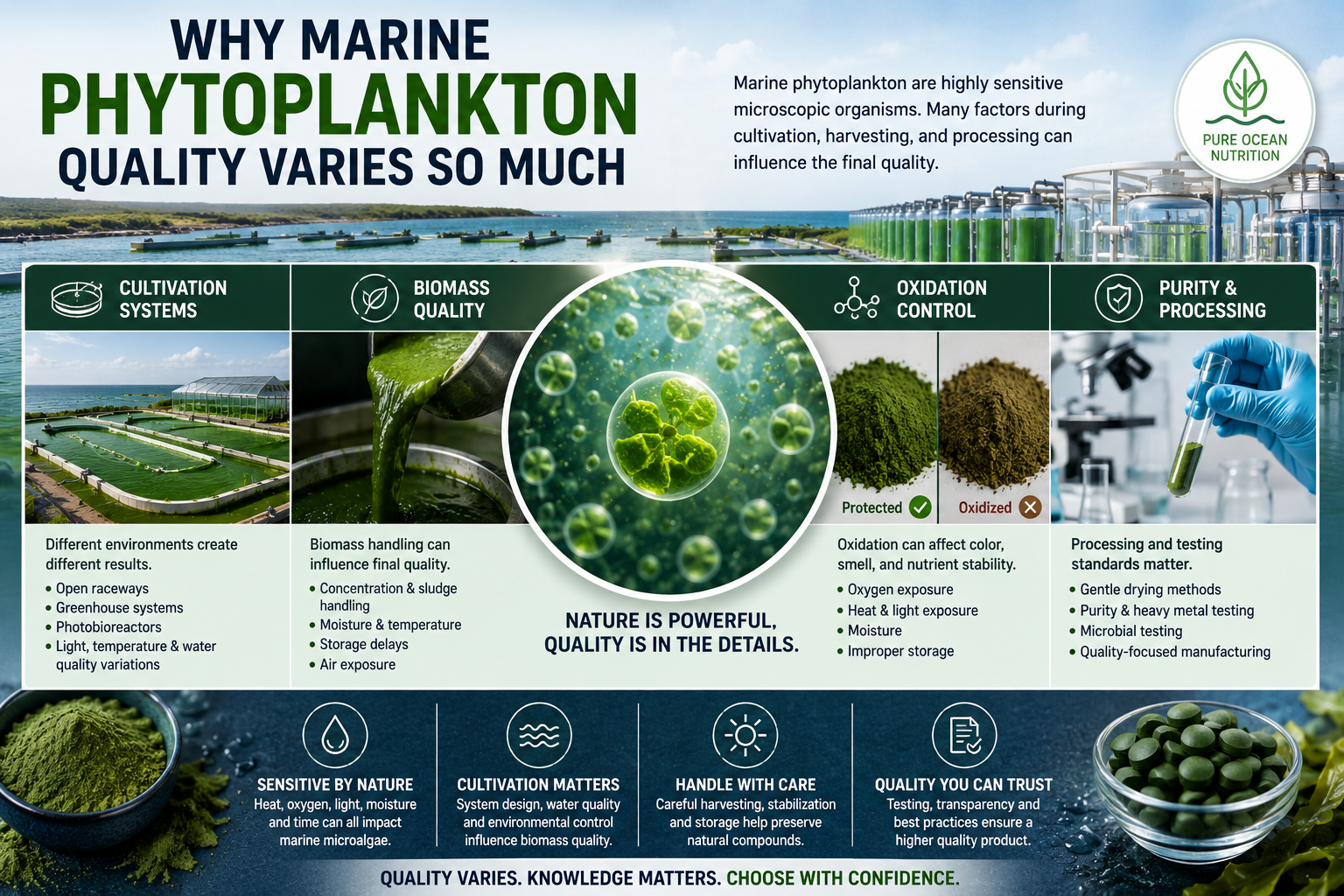
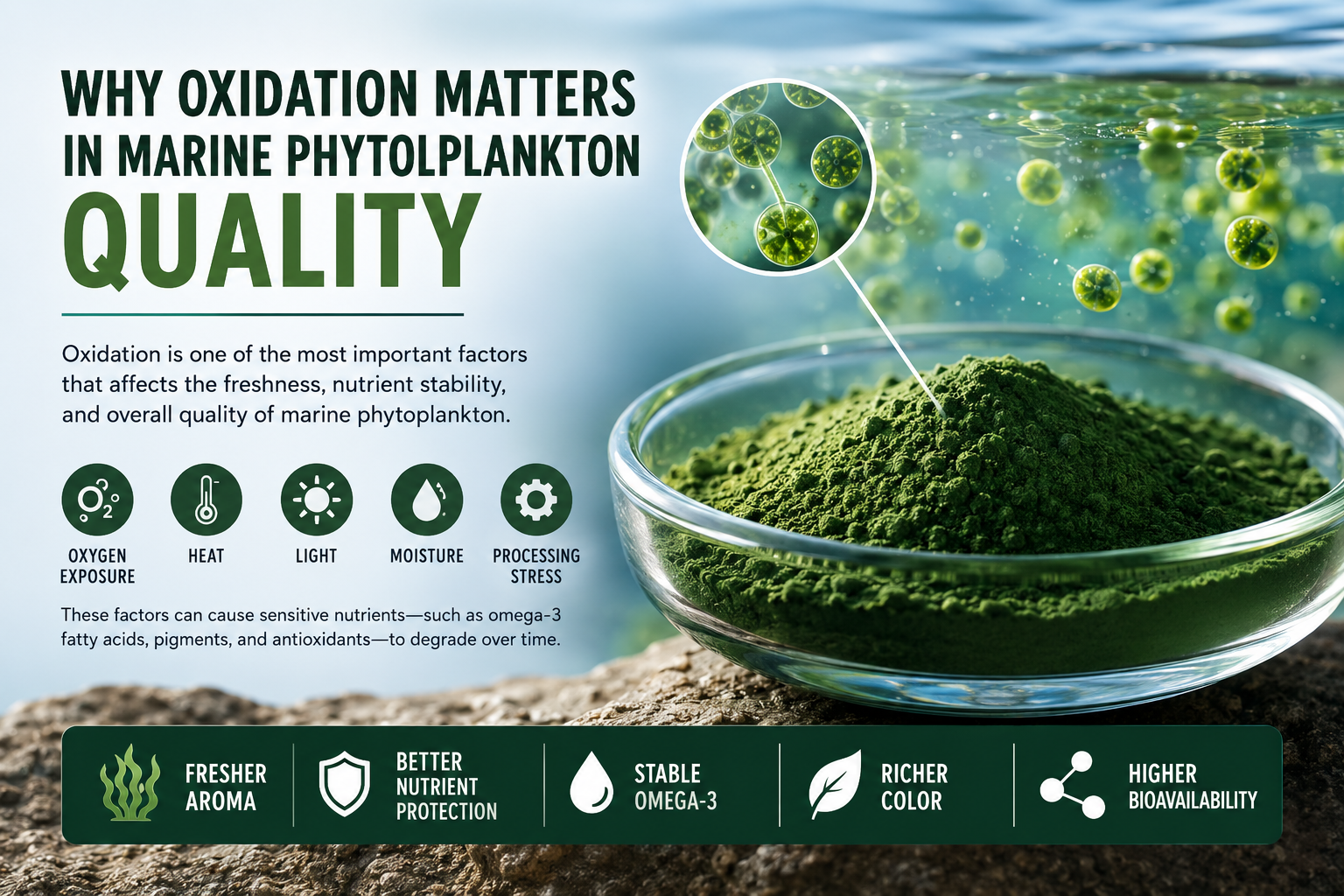
Marine microalgae biomass can be sensitive to:
- Heat exposure
- Oxidation
- Moisture
- Storage conditions
- Environmental stress
Researchers often discuss how careful cultivation, drying, stabilization, and storage may help preserve naturally occurring compounds found in marine phytoplankton.
Particle Size and Absorption Discussions
Particle size is another topic commonly discussed in nutrition and algae research.
Smaller particle sizes may influence how nutrients interact within digestion processes and how biomass disperses in liquids.
Researchers studying algae and marine microalgae continue exploring how processing and physical structure may affect nutrient accessibility.
Marine Nutrition and Future Research
Interest in marine nutrition continues to grow within sustainability research, marine biotechnology, algae science, and wellness-focused nutrition communities.
Researchers continue studying marine phytoplankton and Nannochloropsis for topics involving:
- Nutrient density
- EPA omega-3 production
- Microalgae cultivation
- Marine nutrition
- Bioavailability
- Sustainability
As marine microalgae research expands, bioavailability remains an important area of scientific discussion.
View Marine Phytoplankton Collection
Final Thoughts
Marine phytoplankton bioavailability involves complex interactions between nutrient density, microalgae structure, digestion, processing, and nutrient stability.
Researchers studying marine nutrition and algae science continue exploring how cultivation methods, cell wall structures, and processing techniques may influence nutrient accessibility and absorption.
As with many nutrition topics, scientific understanding continues to evolve as research develops.
FAQ
What is bioavailability?
Bioavailability refers to how efficiently nutrients may be absorbed and utilized.
Why do cell walls matter in algae nutrition?
Cell wall structures may influence nutrient accessibility and digestibility.
Does processing affect marine phytoplankton quality?
Processing methods may influence nutrient stability, oxidation exposure, and biomass quality.
What nutrients are found in marine phytoplankton?
Marine phytoplankton naturally contains EPA omega-3 fatty acids, chlorophyll, amino acids, carotenoids, antioxidants, vitamins, and trace minerals.
Why is marine phytoplankton considered nutrient dense?
Marine phytoplankton contains a broad spectrum of naturally occurring compounds despite relatively small serving sizes.