PCOS and Insulin Resistance: The Missing Link Behind Many Symptoms
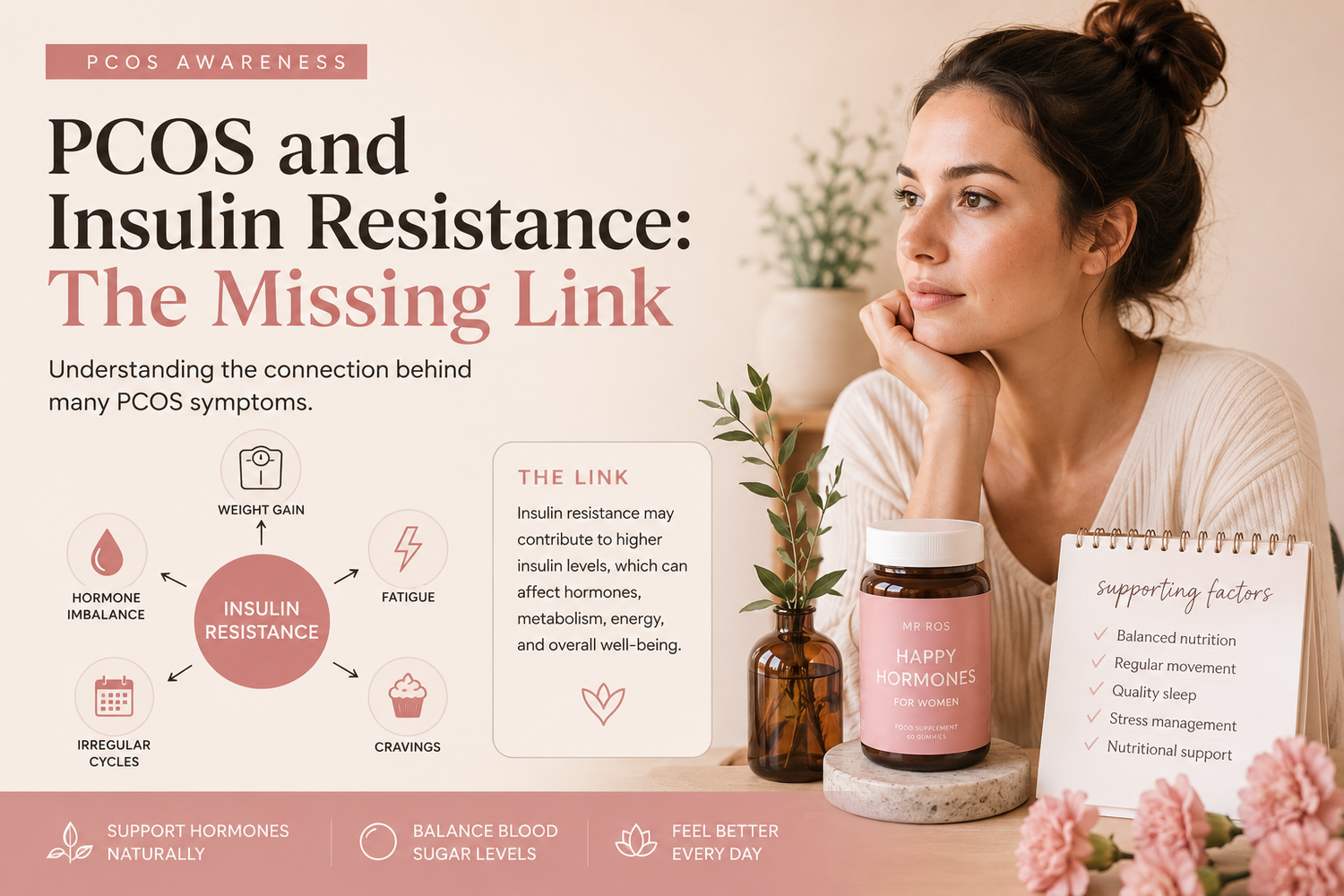
Many women with PCOS experience symptoms like fatigue, stubborn weight gain, cravings, irregular cycles, and difficulty maintaining hormonal balance. One of the most important — yet often overlooked — factors connected to these symptoms is insulin resistance.
Understanding this relationship may help explain why PCOS can affect energy, metabolism, appetite, and hormones at the same time.
What Is Insulin Resistance?
Insulin is a hormone that helps move sugar from the bloodstream into cells, where it can be used for energy.
When the body becomes less sensitive to insulin, it may start producing higher amounts to compensate. This is known as insulin resistance.
Over time, elevated insulin levels may influence several systems in the body, including hormone production, appetite regulation, energy levels, and metabolism.
How Insulin Resistance and PCOS Are Connected
Research suggests that many women with PCOS also experience some degree of insulin resistance.
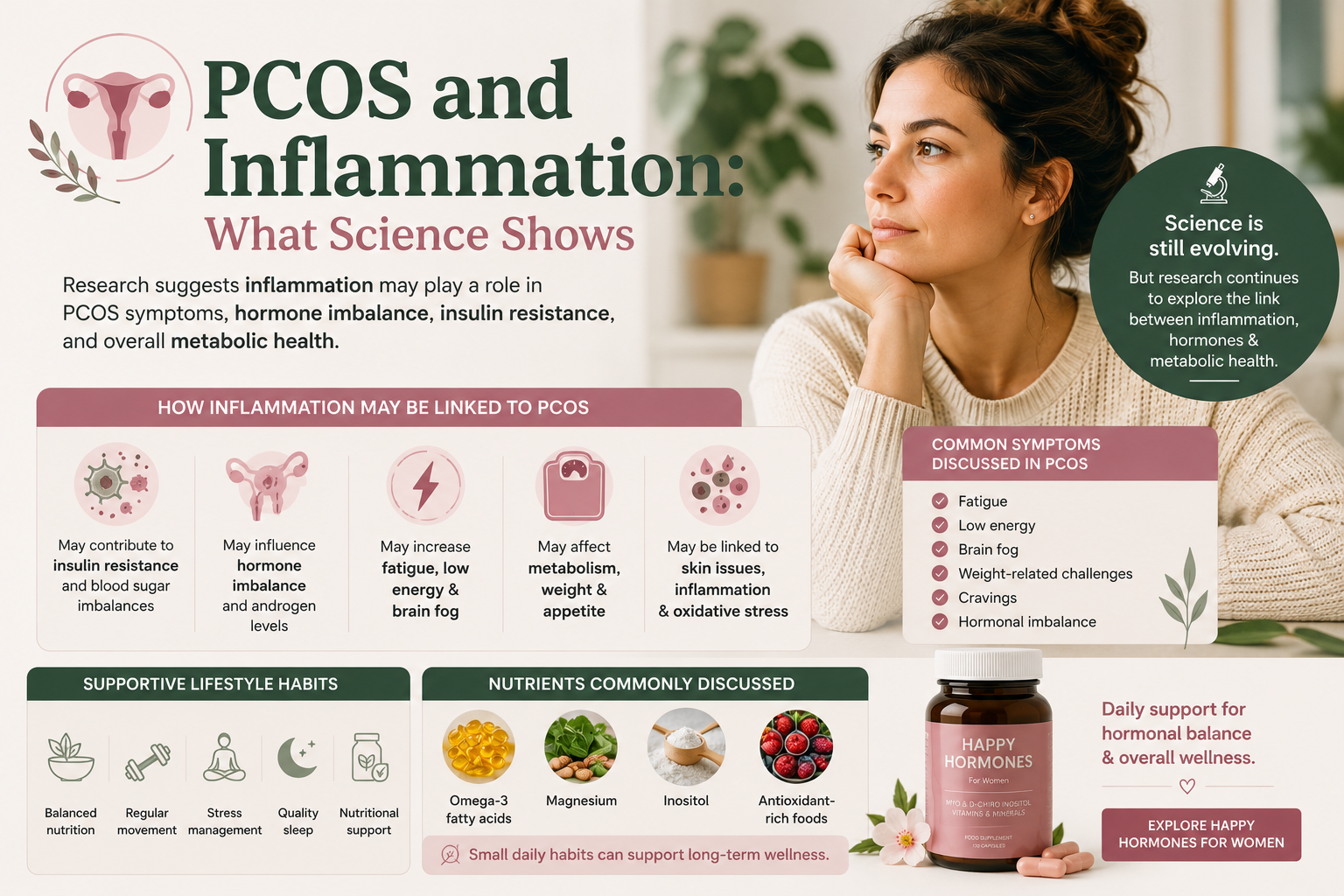
Higher insulin levels may influence androgen production, which can contribute to common PCOS symptoms such as:
- Irregular menstrual cycles
- Weight gain or difficulty losing weight
- Cravings and increased appetite
- Low energy levels
- Brain fog
- Skin-related concerns
- Hormonal imbalance
This may help explain why PCOS often affects multiple areas of health at the same time.
You can also read our PCOS Symptoms Complete Guide article.
Why Energy Levels May Be Affected
Some women with PCOS report feeling tired even after getting enough sleep. Blood sugar fluctuations and insulin-related changes may play a role in these energy swings.
When energy regulation becomes less stable, it may contribute to:
- Afternoon crashes
- Fatigue after meals
- Cravings for sugar or carbohydrates
- Difficulty concentrating
Because of this, many women start looking beyond hormones alone and begin focusing on broader metabolic health as well.
Learn more in our article about how long inositol may take to support women with PCOS.
PCOS Is Not the Same for Every Woman
Not every woman with PCOS experiences insulin resistance in the same way. Some women struggle mainly with fatigue and cravings, while others notice cycle irregularities, inflammation, or weight-related symptoms.
This is one reason why personalized support, nutrition, lifestyle habits, and long-term consistency are often discussed within the PCOS community.
You can also explore the science behind the 40:1 Myo-Inositol and D-Chiro-Inositol ratio for PCOS.
Supporting Hormonal Balance and Metabolic Health
Women with PCOS often explore approaches that support overall wellness and metabolic balance, including:
- Balanced nutrition
- Regular movement
- Sleep quality
- Stress management
- Nutritional support
Ingredients such as inositol, magnesium, omega-3 fatty acids, and other nutrients are frequently discussed in relation to hormonal wellness and metabolic support.
For women looking for daily nutritional support designed for hormone wellness, explore our Happy Hormones for Women formula.
You can also browse our Women’s Supplements Collection.
Final Thoughts
PCOS is complex, and insulin resistance may be one of the major links behind many commonly discussed symptoms. Understanding this connection may help women better understand how hormones, energy, metabolism, and lifestyle factors interact together.
As research continues to evolve, more attention is being placed on whole-body wellness and long-term metabolic health as part of the broader PCOS conversation.
Frequently Asked Questions
Can insulin resistance make PCOS symptoms worse?
Research suggests that insulin resistance may influence several common PCOS symptoms, including cravings, fatigue, weight-related challenges, and hormonal imbalance.
Do all women with PCOS have insulin resistance?
No. PCOS can present differently from person to person. While many women with PCOS experience some degree of insulin resistance, others may experience different symptom patterns.
Can lifestyle habits support metabolic health in women with PCOS?
Many women focus on balanced nutrition, movement, sleep quality, stress management, and nutritional support as part of their broader wellness routine.
Why is insulin important in PCOS?
Insulin plays a role in blood sugar regulation and energy metabolism. Higher insulin levels may also influence hormone-related pathways connected to PCOS symptoms.
What supplements are commonly discussed for PCOS support?
Inositol, magnesium, omega-3 fatty acids, and other nutrients are commonly discussed in relation to hormone wellness and metabolic balance.