What Experts Say About Marine Phytoplankton and Nannochloropsis
Marine phytoplankton has attracted increasing attention from researchers, algae specialists, sustainability experts, and biohackers interested in nutrient density and ocean-based nutrition.
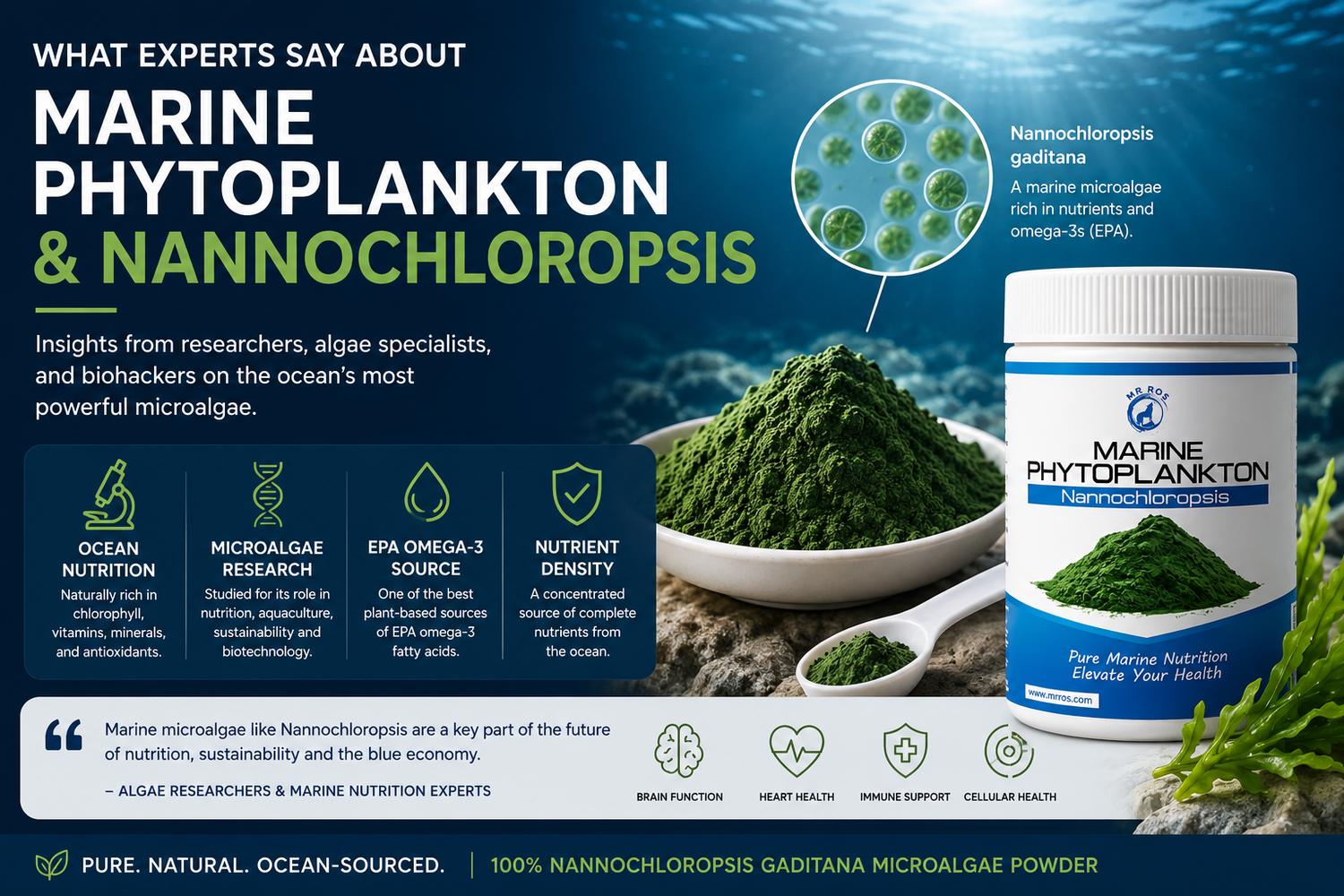
One of the most discussed marine microalgae species is Nannochloropsis gaditana, a microscopic marine organism naturally rich in chlorophyll, EPA omega-3 fatty acids, amino acids, antioxidants, and trace minerals.
In recent years, marine phytoplankton and Nannochloropsis have become topics of interest not only in nutrition, but also in aquaculture, sustainability research, algae cultivation, and biofuel development.
This article explores what experts, researchers, and wellness communities say about marine phytoplankton and why Nannochloropsis continues to gain attention.
What Is Nannochloropsis?
Nannochloropsis is a genus of marine microalgae widely studied for its nutrient density and ability to produce valuable compounds such as EPA omega-3 fatty acids.
Researchers have explored Nannochloropsis species for applications involving:
- Marine nutrition
- Aquaculture
- Omega-3 production
- Microalgae cultivation
- Sustainability research
- Biofuel development
Compared to some other algae species, Nannochloropsis is often recognized for its EPA content and concentrated nutritional profile.
You may also enjoy:
- Marine Phytoplankton and Chlorophyll
- Marine Phytoplankton Benefits
- Marine Phytoplankton for Energy
- Marine Phytoplankton for Gut Health
Why Researchers Study Marine Microalgae
Marine microalgae are studied because they naturally produce a wide range of biologically active compounds.
Scientists and algae researchers often discuss nutrients naturally found in marine phytoplankton, including:
- EPA omega-3 fatty acids
- Chlorophyll
- Carotenoids
- Polyphenols
- Amino acids
- Trace minerals
Researchers continue exploring how marine microalgae may contribute to future nutrition, sustainability, and marine biotechnology applications.
Marine Phytoplankton and Nutrient Density
One reason experts discuss marine phytoplankton is its concentrated nutritional profile despite relatively small serving sizes.
Many wellness-focused consumers and biohackers are interested in nutrient-dense foods that provide a broad spectrum of naturally occurring compounds.
Marine phytoplankton naturally contains:
- Chlorophyll
- EPA omega-3 fatty acids
- Antioxidants
- Amino acids
- Carotenoids
- Trace minerals
This combination has contributed to growing interest within ocean nutrition and wellness communities.
What Biohackers Say About Marine Phytoplankton
Biohackers and wellness communities often discuss nutrient density, recovery, cellular nutrition, and chlorophyll-rich foods.
Some individuals interested in wellness optimization include marine phytoplankton as part of broader nutrition-focused routines involving hydration, whole foods, and micronutrient diversity.
Topics commonly discussed include:
- Chlorophyll-rich nutrition
- Ocean minerals
- EPA omega-3s
- Antioxidant compounds
- Low-dose nutrient density
- Microalgae nutrition
As with many wellness topics, experiences and opinions can vary significantly between individuals.
Marine Phytoplankton in Sustainability Research
Marine microalgae have also become important in sustainability discussions because of their rapid growth potential and diverse applications.
Researchers have explored marine phytoplankton and Nannochloropsis for:
- Sustainable nutrition
- Aquaculture feed systems
- Omega-3 production
- Marine biotechnology
- Biofuel research
This broader scientific interest continues to increase awareness around marine microalgae species.
View Marine Phytoplankton Collection
Final Thoughts
Marine phytoplankton and Nannochloropsis continue to attract interest from researchers, algae specialists, sustainability experts, and wellness-focused communities.
Its naturally occurring chlorophyll, EPA omega-3 fatty acids, antioxidants, amino acids, and trace minerals make marine phytoplankton one of the most discussed marine microalgae categories in modern ocean nutrition discussions.
As with any supplement or wellness topic, individual perspectives and experiences may vary.
FAQ
What is Nannochloropsis?
Nannochloropsis is a genus of marine microalgae studied for its nutrient density and EPA omega-3 content.
Why do researchers study marine phytoplankton?
Researchers study marine phytoplankton because it naturally contains compounds such as chlorophyll, EPA omega-3 fatty acids, antioxidants, and amino acids.
Does marine phytoplankton contain omega-3?
Marine phytoplankton naturally contains EPA omega-3 fatty acids.
Why are biohackers interested in marine phytoplankton?
Some biohackers discuss marine phytoplankton because of its nutrient density, chlorophyll content, and ocean-based nutritional profile.
Is Nannochloropsis used in sustainability research?
Yes, researchers have explored Nannochloropsis in sustainability, aquaculture, biotechnology, and omega-3 production research.