Marine Phytoplankton Nutrition Breakdown: EPA, Chlorophyll, Amino Acids & Antioxidants
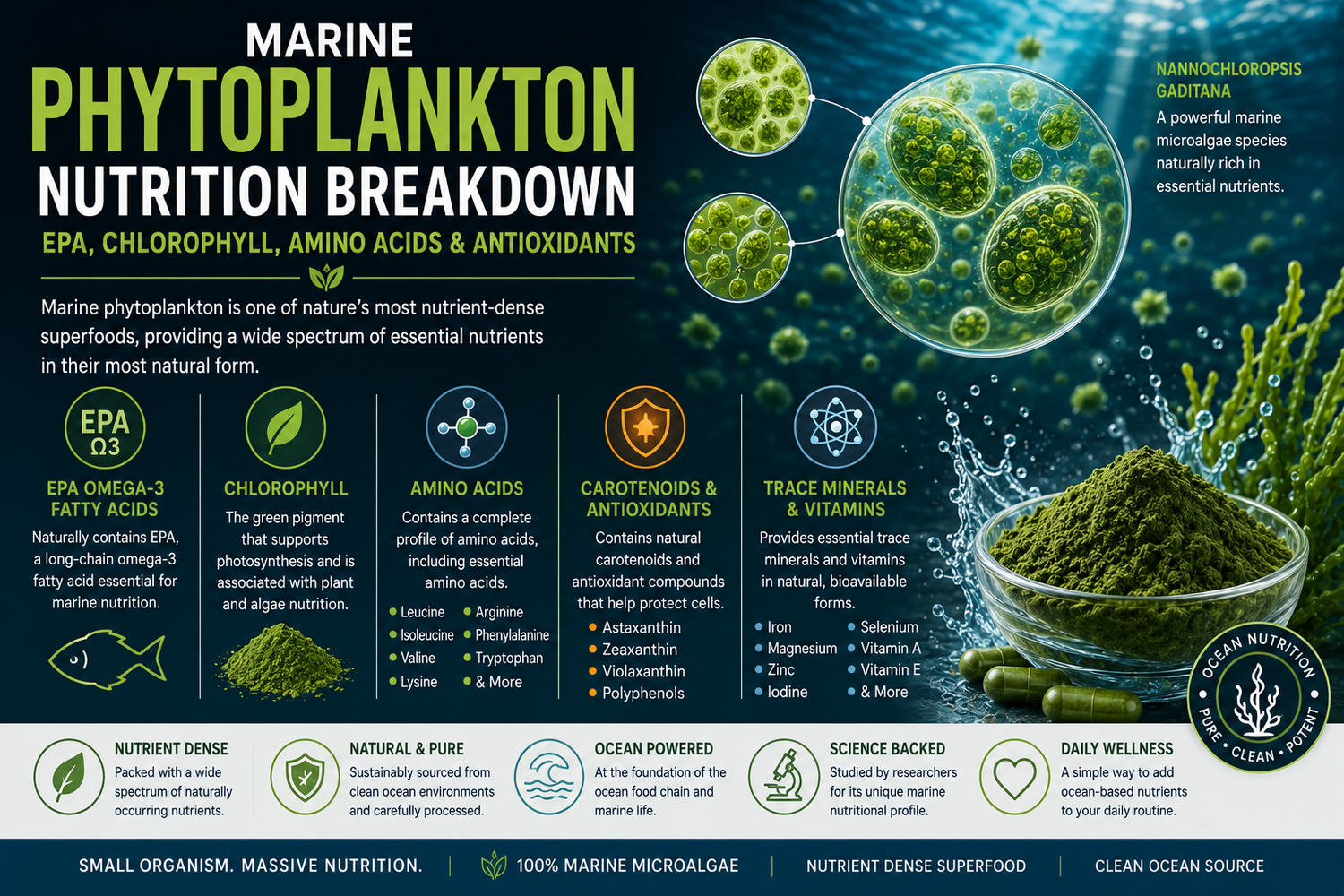
Marine phytoplankton is often discussed as one of the most nutrient-dense ocean superfoods because it naturally contains a broad spectrum of compounds including chlorophyll, EPA omega-3 fatty acids, amino acids, carotenoids, antioxidants, vitamins, and trace minerals.
One of the most studied marine microalgae species used in marine phytoplankton supplements is Nannochloropsis gaditana, a microscopic marine organism known for its concentrated nutritional profile.
This article explores the nutritional composition of marine phytoplankton and explains some of the naturally occurring compounds commonly found in marine microalgae.
What Is Marine Phytoplankton?
Marine phytoplankton are microscopic marine organisms that form the foundation of the ocean food chain.
Despite their tiny size, marine phytoplankton naturally produce and contain a wide range of biologically active compounds used throughout marine ecosystems.
Marine phytoplankton supplements are commonly available as powders or capsules and are often used in wellness-focused nutrition routines.
You may also enjoy:
- What Experts Say About Marine Phytoplankton and Nannochloropsis
- Marine Phytoplankton and Chlorophyll
- Marine Phytoplankton for Energy
- Marine Phytoplankton Benefits
EPA Omega-3 Fatty Acids
Marine phytoplankton naturally contains EPA omega-3 fatty acids, one of the most discussed compounds in marine nutrition research.
EPA is commonly associated with marine nutrition and is naturally produced within marine ecosystems by microscopic algae and phytoplankton species.
Nannochloropsis species are widely studied for their EPA content and marine omega-3 production potential.
Chlorophyll
Marine phytoplankton naturally contains chlorophyll, the green pigment involved in photosynthesis.
Chlorophyll-rich foods and algae are commonly discussed in wellness-focused nutrition and green superfood communities.
Many individuals include chlorophyll-containing foods as part of nutrient-diverse diets.
Amino Acids
Marine phytoplankton naturally contains amino acids, including several essential amino acids commonly discussed in nutrition science.
Amino acids are important building blocks found throughout biological systems and are naturally present in many nutrient-rich foods.
Marine phytoplankton nutritional profiles may include amino acids such as:
- Leucine
- Isoleucine
- Valine
- Lysine
- Arginine
- Phenylalanine
- Tryptophan
Carotenoids and Antioxidants
Marine phytoplankton naturally contains carotenoids and antioxidant compounds commonly studied in marine nutrition research.
Depending on species and processing methods, marine microalgae may naturally contain compounds such as:
- Astaxanthin
- Zeaxanthin
- Violaxanthin
- Polyphenols
These compounds are often discussed within algae nutrition and antioxidant research.
Trace Minerals and Vitamins
Marine phytoplankton also naturally contains trace minerals and vitamins in small amounts.
Depending on species and cultivation conditions, marine phytoplankton may contain nutrients such as:
- Iron
- Magnesium
- Zinc
- Iodine
- Selenium
- Vitamin A
- Vitamin E
This broad nutritional spectrum contributes to growing interest in marine microalgae nutrition.
Nutrient Density and Small Serving Sizes
One reason marine phytoplankton receives attention is its highly concentrated nutritional profile despite relatively small serving sizes.
Many consumers interested in nutrient density, ocean nutrition, and wellness-focused diets explore marine phytoplankton because of its broad range of naturally occurring compounds.
Researchers and wellness communities continue discussing marine phytoplankton within broader conversations involving algae nutrition, chlorophyll-rich foods, and marine microalgae research.
View Marine Phytoplankton Collection
Final Thoughts
Marine phytoplankton naturally contains EPA omega-3 fatty acids, chlorophyll, amino acids, carotenoids, antioxidants, vitamins, and trace minerals.
As interest in marine nutrition and nutrient-dense foods continues to grow, marine phytoplankton and Nannochloropsis remain important topics within ocean nutrition discussions.
As with many nutrition topics, nutrient levels and composition may vary depending on species, sourcing, and processing methods.
FAQ
Does marine phytoplankton contain omega-3?
Yes, marine phytoplankton naturally contains EPA omega-3 fatty acids.
Does marine phytoplankton contain chlorophyll?
Yes, marine phytoplankton naturally contains chlorophyll.
What amino acids are found in marine phytoplankton?
Marine phytoplankton may naturally contain amino acids such as leucine, lysine, valine, arginine, and tryptophan.
What antioxidants are found in marine phytoplankton?
Marine phytoplankton may naturally contain carotenoids and antioxidant compounds such as astaxanthin, zeaxanthin, violaxanthin, and polyphenols.
Why is marine phytoplankton considered nutrient dense?
Marine phytoplankton contains a broad spectrum of naturally occurring nutrients despite relatively small serving sizes.