How Marine Phytoplankton Is Cultivated: Raceways, Photobioreactors and Marine Microalgae Systems
Marine phytoplankton cultivation is a fascinating combination of marine biology, environmental science, engineering, and nutrition research.
As interest in marine microalgae continues to grow, more researchers, algae specialists, and wellness communities are exploring how species such as Nannochloropsis gaditana are cultivated for marine nutrition, sustainability research, aquaculture, and ocean-based supplements.
Marine phytoplankton cultivation systems can range from open outdoor raceways to greenhouse cultivation systems and highly controlled closed photobioreactors.
This article explores how marine phytoplankton is cultivated, how cultivation systems differ, and why factors such as CO2, oxygen production, light exposure, water quality, and temperature are important in marine microalgae science.
What Is Marine Phytoplankton Cultivation?
Marine phytoplankton cultivation involves growing microscopic marine algae under controlled environmental conditions.
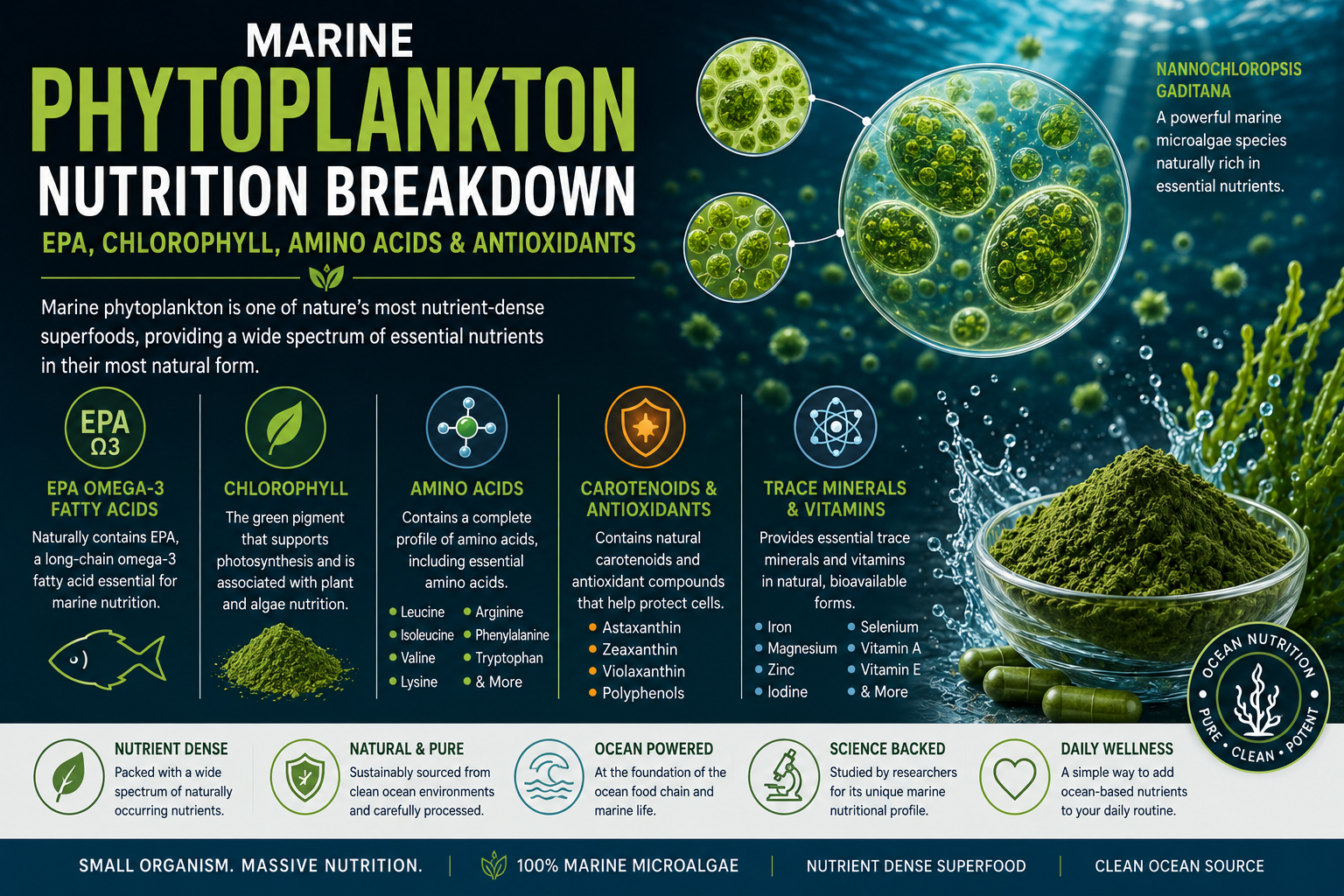
Species such as Nannochloropsis are cultivated because they naturally contain chlorophyll, EPA omega-3 fatty acids, carotenoids, amino acids, antioxidants, and trace minerals.
Researchers and algae specialists study marine microalgae for applications involving:
- Marine nutrition
- Omega-3 production
- Sustainability research
- Aquaculture
- Marine biotechnology
- Biofuel research
You may also enjoy:
- What Experts Say About Marine Phytoplankton and Nannochloropsis
- Marine Phytoplankton Nutrition Breakdown
- Marine Phytoplankton Sludge, Biomass Quality and Processing Explained
- Marine Phytoplankton and Chlorophyll
Open Raceway Systems

One of the most common cultivation methods for microalgae involves open raceway systems.
These systems are typically shallow outdoor ponds where algae circulate continuously in sunlight-rich environments.
Open raceways are often used because they can operate at relatively large scale and use natural sunlight for photosynthesis.
However, open systems may also face challenges involving:
- Temperature fluctuations
- Contamination risks
- Weather exposure
- Water evaporation
- Biological competition
Because marine microalgae are highly sensitive organisms, cultivation conditions can significantly influence biomass quality and growth stability.
Greenhouse Raceway Systems

Some marine microalgae producers use greenhouse-based raceway systems that combine natural sunlight with greater environmental control.
In greenhouse systems, algae can grow in controlled environments while still receiving large amounts of natural light.
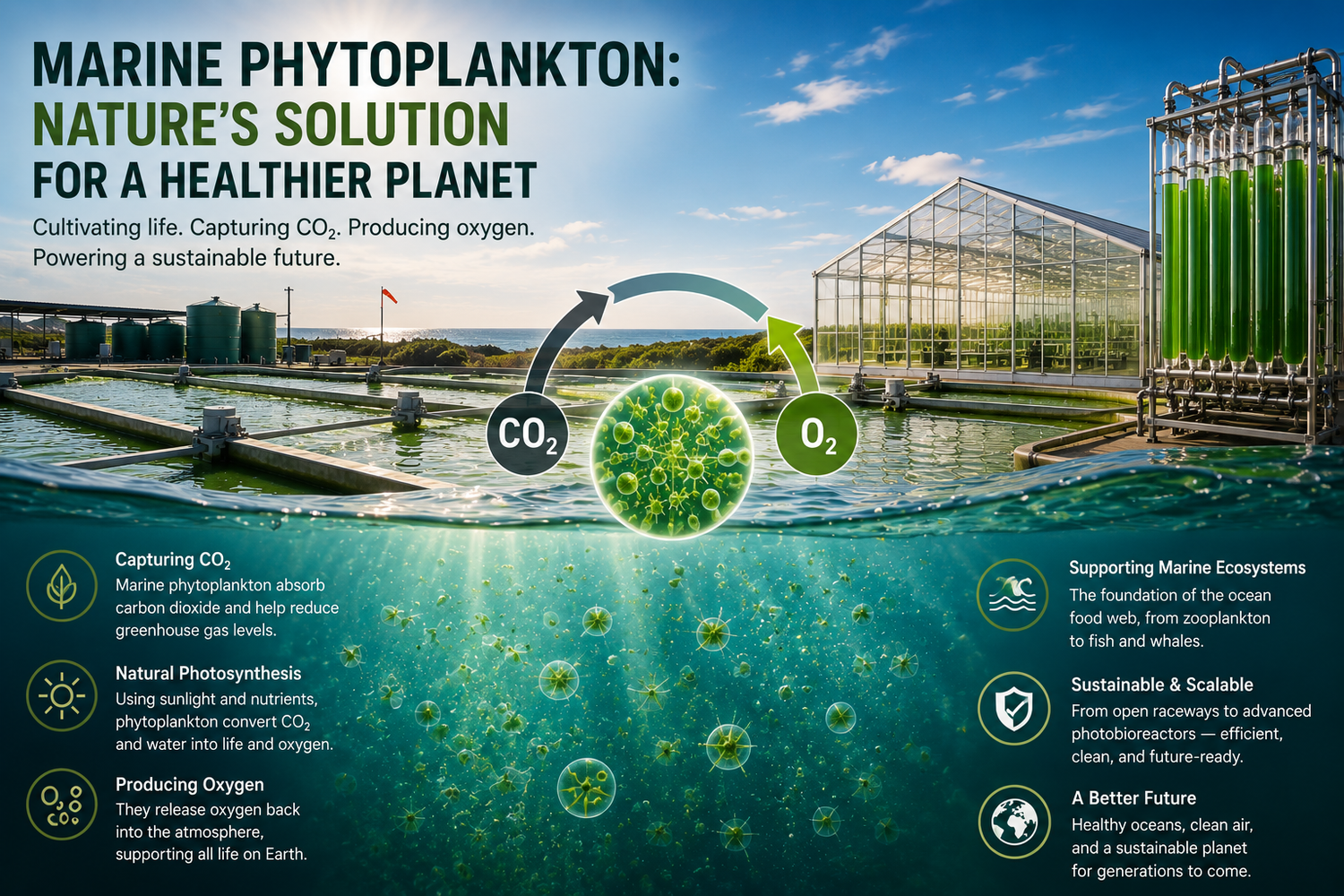
Many people visiting greenhouse algae facilities describe the environment as noticeably fresh because marine microalgae consume carbon dioxide (CO2) and release oxygen during photosynthesis.
Marine phytoplankton and algae play an important role in natural oxygen production and the global carbon cycle.
Some researchers estimate that marine phytoplankton contribute significantly to oxygen production within Earth's ecosystems.
Closed Photobioreactors

Highly controlled cultivation systems known as photobioreactors are also used in marine microalgae production.
These systems are often built using enclosed transparent tubes, panels, or metal-supported structures that allow precise control over environmental conditions.
Photobioreactors may help improve control over:
- Contamination
- Temperature
- Light exposure
- Water quality
- Nutrient delivery
- Biomass consistency
However, closed systems are typically more complex and expensive to operate compared to open raceway systems.
Why Temperature Matters for Nannochloropsis
Nannochloropsis species require specific environmental conditions to grow efficiently.
Marine microalgae cultivation is highly sensitive to factors such as:
- Water temperature
- Light intensity
- Salinity
- CO2 availability
- Nutrient balance
- Water quality
If environmental conditions become unstable, algae growth rates and biomass quality may change significantly.
Researchers and algae cultivation specialists closely monitor these variables during production.
Marine Phytoplankton, CO2 and Oxygen Production

Like plants on land, marine phytoplankton consume carbon dioxide and produce oxygen through photosynthesis.
Marine microalgae are considered important contributors to Earth's natural carbon and oxygen cycles.
Within ocean ecosystems, phytoplankton help support marine food chains while also participating in global carbon cycling processes.
Scientists continue studying how marine ecosystems and microalgae influence environmental systems, sustainability research, and future marine biotechnology applications.
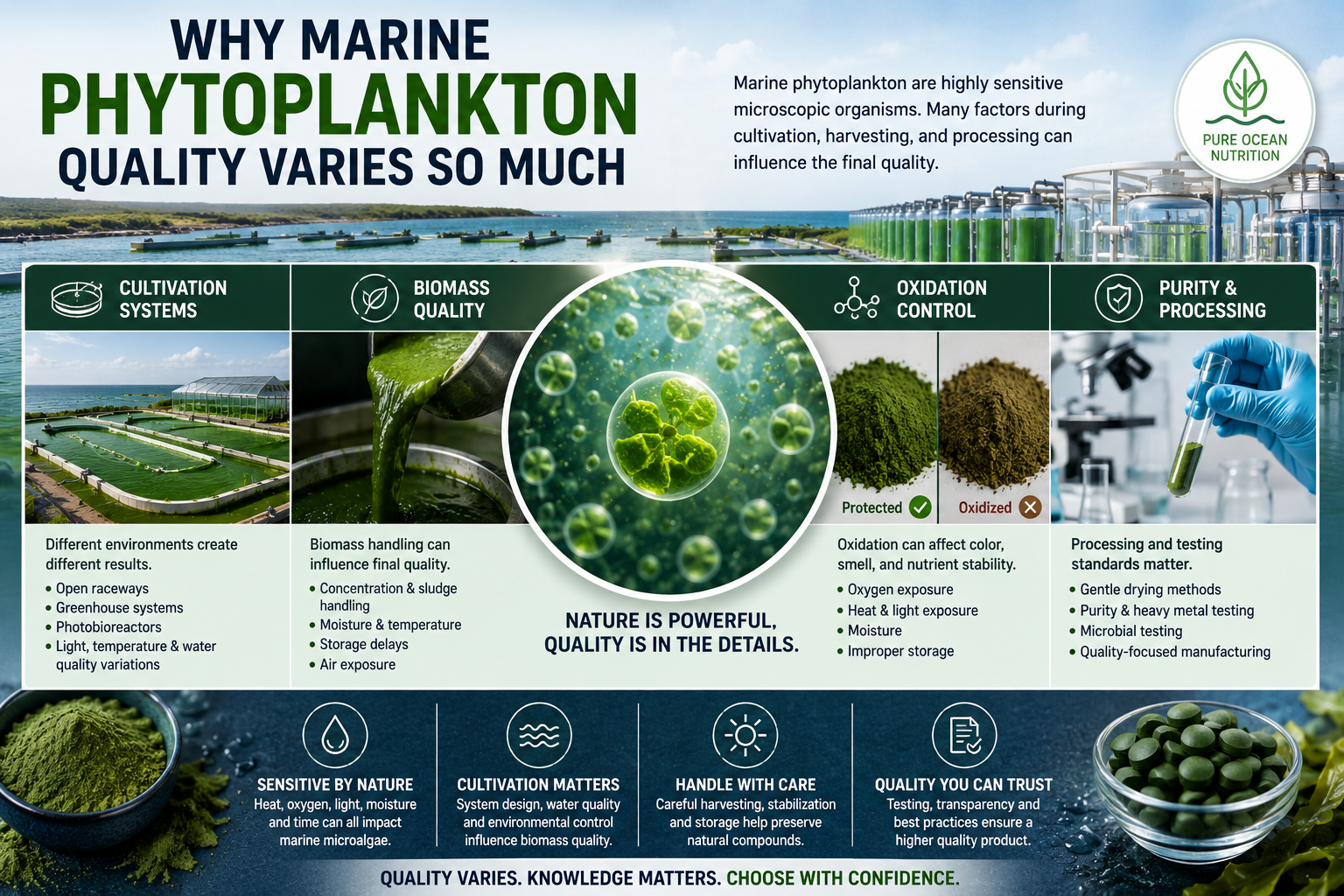
Why Cultivation Quality Matters
Marine phytoplankton cultivation involves highly sensitive biological systems.
Factors such as oxidation, contamination, harvesting methods, moisture levels, and drying techniques may influence biomass quality and nutrient stability.
Many consumers interested in marine phytoplankton look for products emphasizing:
- Controlled cultivation
- Purity testing
- Heavy metal screening
- Quality-focused processing
- Clean sourcing practices
View Marine Phytoplankton Collection
Final Thoughts
Marine phytoplankton cultivation combines marine biology, environmental science, engineering, and algae research.
From open outdoor raceways to greenhouse systems and closed photobioreactors, cultivation methods can significantly influence marine microalgae growth, biomass quality, and environmental control.
As scientific interest in marine phytoplankton and Nannochloropsis continues to grow, marine microalgae remain important topics within ocean nutrition, sustainability, and marine biotechnology discussions.
FAQ
What are raceway systems in algae cultivation?
Raceway systems are shallow circulating ponds commonly used to cultivate microalgae using sunlight and water movement.
What is a photobioreactor?
A photobioreactor is a controlled cultivation system used for growing algae under carefully managed environmental conditions.
Does marine phytoplankton consume CO2?
Yes, marine phytoplankton consume carbon dioxide and produce oxygen during photosynthesis.
Why is temperature important in marine microalgae cultivation?
Marine microalgae species such as Nannochloropsis are sensitive to temperature, light, salinity, and nutrient conditions.
Why are greenhouse algae systems used?
Greenhouse systems may provide greater environmental control while still allowing exposure to natural sunlight.