Why Marine Phytoplankton Quality Varies So Much
As marine phytoplankton supplements become more popular, many consumers are beginning to notice that marine phytoplankton products can vary significantly in color, smell, texture, taste, purity, and overall consistency.
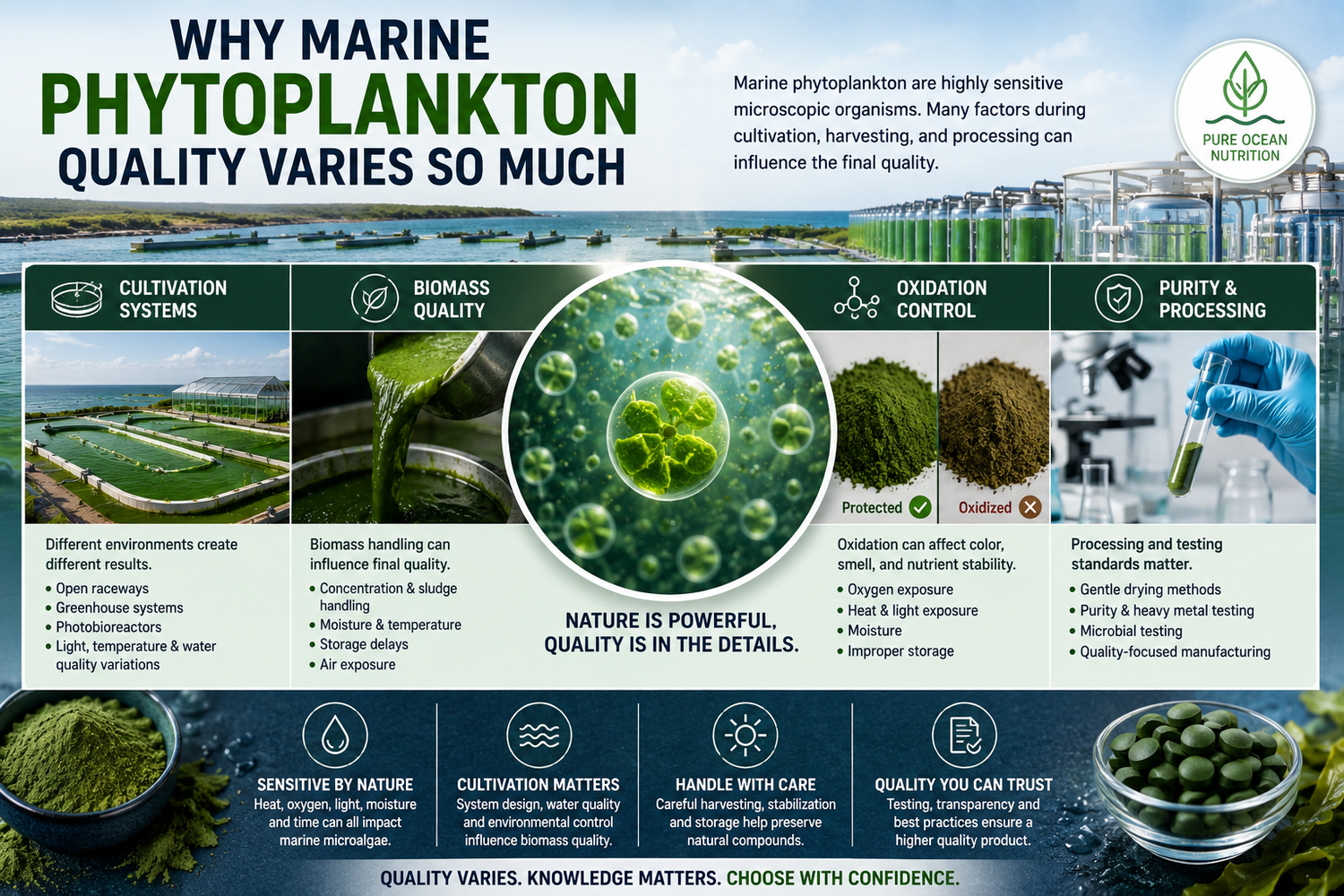
Marine phytoplankton quality is influenced by many factors including cultivation systems, environmental conditions, harvesting methods, biomass concentration, oxidation exposure, drying techniques, and storage conditions.
Because marine microalgae are highly sensitive biological organisms, even small differences in cultivation and processing may influence the final product.
This article explores why marine phytoplankton quality varies so much and why cultivation and processing methods matter in marine microalgae production.
Marine Phytoplankton Is Highly Sensitive
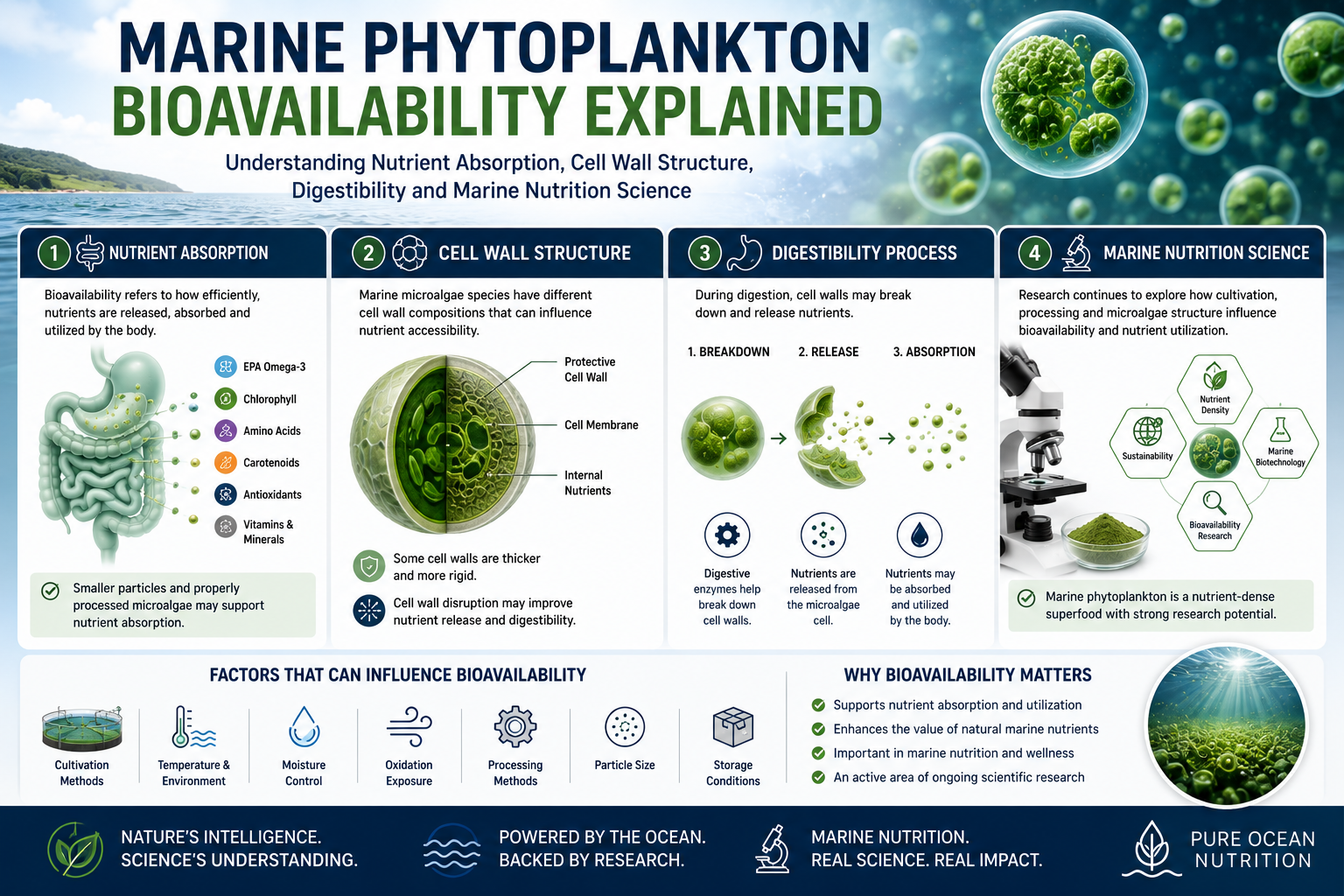
Marine phytoplankton consists of microscopic marine organisms that naturally contain chlorophyll, EPA omega-3 fatty acids, carotenoids, amino acids, antioxidants, and trace minerals.
These naturally occurring compounds can be sensitive to:
- Heat exposure
- Oxidation
- Light exposure
- Moisture
- Storage conditions
- Processing techniques
Because marine microalgae biomass is delicate, cultivation and handling practices may significantly influence overall product quality.
You may also enjoy:
- How Marine Phytoplankton Is Cultivated
- Marine Phytoplankton Sludge, Biomass Quality and Processing Explained
- Marine Phytoplankton Nutrition Breakdown
- What Experts Say About Marine Phytoplankton and Nannochloropsis
Cultivation Systems Can Influence Quality
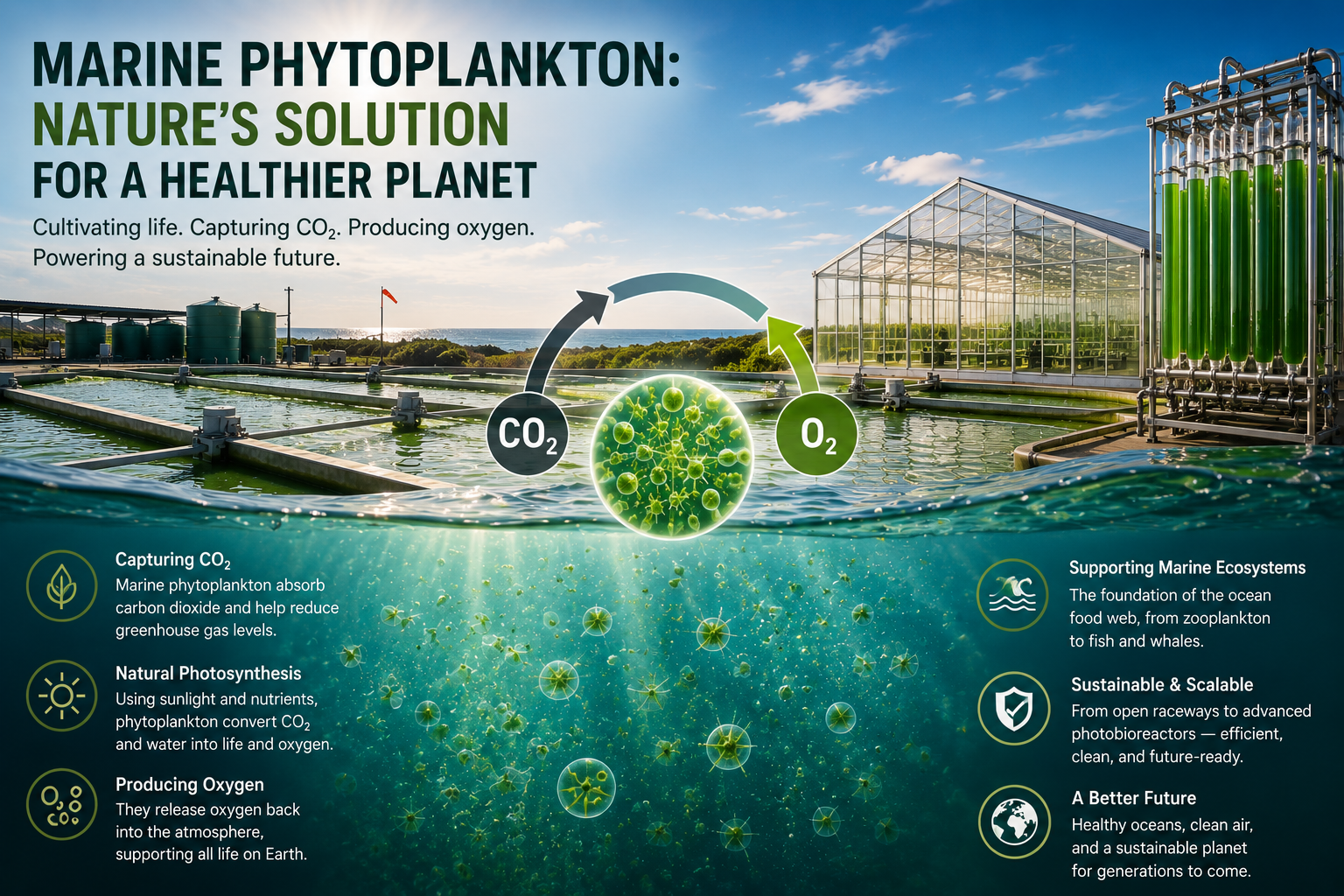
Marine phytoplankton may be cultivated using different systems including:
- Open outdoor raceways
- Greenhouse raceway systems
- Closed photobioreactors
Each cultivation system has different advantages and challenges involving:
- Environmental control
- Contamination risks
- Temperature stability
- Light exposure
- Water quality
- Biomass consistency
Because marine microalgae are highly sensitive to environmental changes, cultivation systems may influence biomass quality and stability.
Oxidation and Nutrient Stability
One of the most important topics in marine phytoplankton processing is oxidation.
Some naturally occurring compounds found in marine phytoplankton may be sensitive to oxygen, heat, moisture, and environmental exposure.
Researchers and algae specialists often discuss how oxidation may influence:
- Color changes
- Smell
- Freshness
- Texture
- Nutrient stability
Improper storage or processing conditions may increase oxidation exposure during biomass handling.
Biomass Concentration and Sludge Handling
Marine phytoplankton cultivation often involves concentrating extremely small organisms into dense wet biomass sometimes referred to as slurry or algae sludge.
During these concentration stages, biomass handling becomes important because marine microalgae may be sensitive to:
- Moisture buildup
- Temperature fluctuations
- Storage delays
- Air exposure
- Contamination risks
How this biomass is processed, dried, stabilized, and stored may influence final product quality.
Drying Methods Matter
Drying is another major factor influencing marine phytoplankton quality.
Different drying approaches may expose marine microalgae biomass to different levels of:
- Heat
- Oxygen
- Moisture
- Environmental stress
Researchers and algae specialists often discuss how careful processing may help preserve naturally occurring compounds such as chlorophyll, EPA omega-3 fatty acids, carotenoids, amino acids, and antioxidants.
View Marine Phytoplankton Collection
Purity and Testing Standards
Many consumers interested in marine phytoplankton also pay attention to sourcing transparency and testing standards.
Ocean-based supplements are often evaluated for:
- Heavy metal testing
- Purity standards
- Microbial testing
- Contamination screening
- Quality-focused manufacturing
Marine phytoplankton products may vary significantly depending on sourcing, processing, and quality control practices.
Why Color, Smell and Texture Can Differ
Because marine phytoplankton products are natural marine biomass materials, appearance and sensory characteristics may vary between batches and producers.
Differences may involve:
- Green color intensity
- Ocean-like smell
- Texture consistency
- Moisture levels
- Powder density
These variations may reflect differences in cultivation conditions, biomass quality, processing methods, and storage practices.
Final Thoughts
Marine phytoplankton quality can vary significantly depending on cultivation systems, biomass handling, oxidation control, drying methods, sourcing, and purity standards.
Because marine microalgae are highly sensitive biological organisms, careful cultivation and processing practices are important topics within marine phytoplankton production and marine nutrition discussions.
As interest in marine microalgae continues to grow, more consumers and researchers are paying attention to quality-focused cultivation and processing methods.
FAQ
Why does marine phytoplankton quality vary?
Marine phytoplankton quality may vary because of differences in cultivation systems, oxidation exposure, biomass handling, processing methods, and purity standards.
What affects marine phytoplankton freshness?
Factors such as oxygen exposure, heat, moisture, and storage conditions may influence freshness and stability.
Why do some marine phytoplankton products smell different?
Differences in biomass quality, oxidation, processing, and storage may influence smell and sensory characteristics.
What is marine phytoplankton sludge?
Marine phytoplankton sludge generally refers to concentrated wet biomass collected during harvesting and processing stages.
Why do cultivation systems matter?
Cultivation systems may influence environmental control, contamination risks, biomass consistency, and overall product quality.