What Is PCOS?
Polycystic ovary syndrome (PCOS) is one of the most common hormonal disorders affecting women of reproductive age, estimated to affect 1 in 10 women worldwide. Despite its prevalence, PCOS is frequently misdiagnosed or diagnosed late — often because its symptoms are diverse, overlap with other conditions, and vary significantly from woman to woman.
PCOS is not a single disease but a syndrome — a cluster of signs and symptoms that together indicate an underlying hormonal and metabolic imbalance. Understanding the full spectrum of PCOS symptoms is the first step toward getting the right diagnosis and finding effective support.
The Rotterdam Criteria: How PCOS Is Diagnosed
Doctors typically use the Rotterdam Criteria to diagnose PCOS. A diagnosis requires at least 2 of the following 3 features:
- Irregular or absent menstrual cycles (oligo- or anovulation)
- Signs of excess androgens (elevated testosterone on blood tests, or physical symptoms like acne and hirsutism)
- Polycystic ovaries on ultrasound (12 or more follicles in one ovary, or increased ovarian volume)
Importantly, you don't need to have cysts on your ovaries to be diagnosed with PCOS — the name is somewhat misleading. The "cysts" are actually immature follicles that haven't ovulated.
PCOS Symptoms: The Full Spectrum
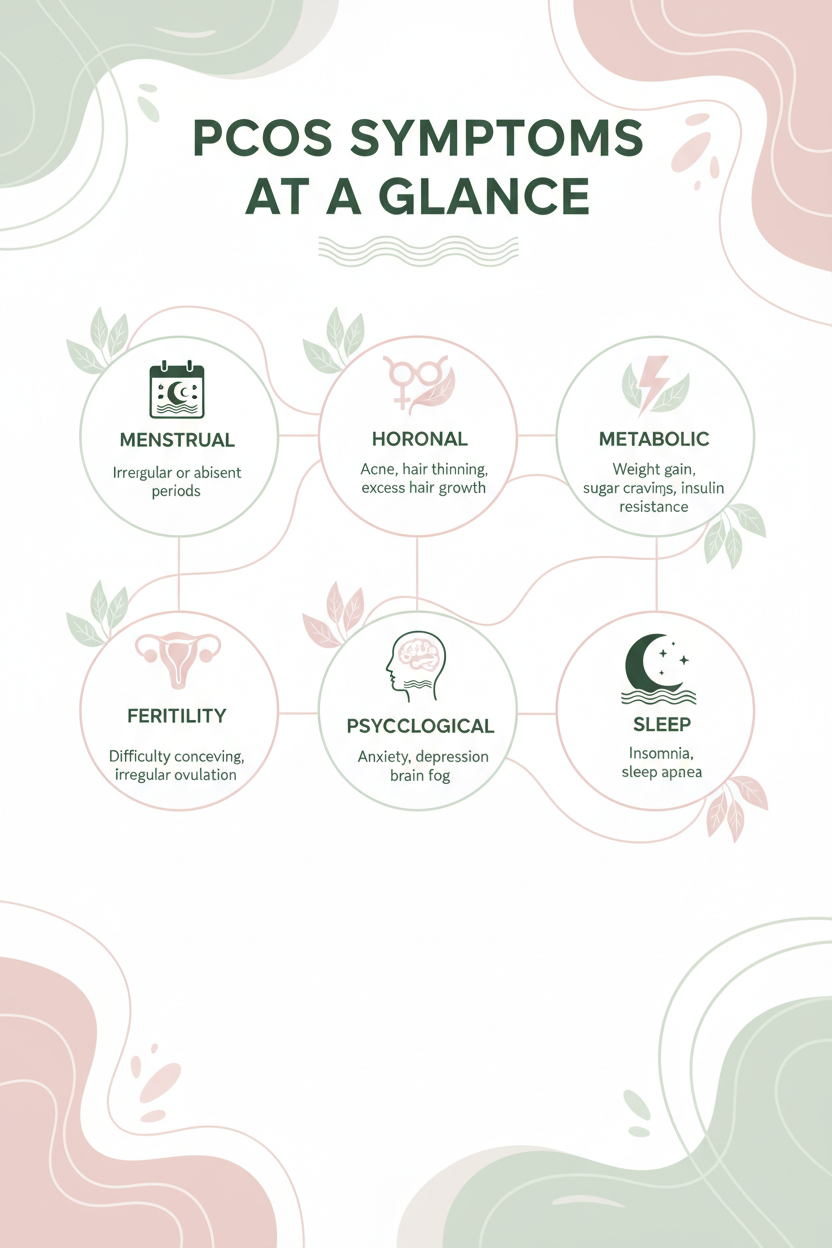
Menstrual Irregularities
Disrupted menstrual cycles are the hallmark symptom of PCOS and often the first sign women notice:
- Infrequent periods (oligomenorrhea): Fewer than 8 periods per year, or cycles longer than 35 days
- Absent periods (amenorrhea): No period for 3 or more consecutive months
- Unpredictable cycles: Cycle length varying significantly month to month
- Heavy periods (menorrhagia): When ovulation does occur, the uterine lining may be thicker than normal, causing heavier bleeding
Androgen Excess Symptoms
Elevated androgens (male hormones like testosterone and DHEAS) cause a range of physical symptoms:
- Hirsutism: Excess hair growth on the face, chin, chest, abdomen, or inner thighs — affecting up to 70% of women with PCOS
- Hormonal acne: Typically appearing on the jawline, chin, and lower face; often cystic and resistant to standard treatments
- Androgenic alopecia: Hair thinning or loss at the crown and temples, similar to male-pattern baldness
- Oily skin: Excess sebum production driven by androgens
Metabolic Symptoms
Up to 70% of women with PCOS have some degree of insulin resistance, which drives a cascade of metabolic symptoms:
- Weight gain or difficulty losing weight: Particularly around the abdomen; insulin resistance promotes fat storage
- Sugar cravings and energy crashes: Blood sugar dysregulation causes intense cravings and post-meal fatigue
- Acanthosis nigricans: Dark, velvety patches of skin in the neck folds, armpits, or groin — a visible sign of insulin resistance
- Elevated fasting insulin or blood sugar: May progress to prediabetes or type 2 diabetes if unmanaged
- High triglycerides and low HDL cholesterol: Increasing cardiovascular risk
Reproductive and Fertility Symptoms
- Difficulty conceiving: Irregular ovulation is the most common cause of female infertility; PCOS accounts for approximately 80% of anovulatory infertility cases
- Recurrent miscarriage: Elevated LH and insulin resistance may increase miscarriage risk
- Multiple follicles on ultrasound: The "string of pearls" appearance of immature follicles on ovarian ultrasound
Psychological Symptoms
PCOS has a significant psychological burden that is often underrecognized:
- Anxiety: Women with PCOS have significantly higher rates of anxiety disorders than the general population
- Depression: Hormonal imbalances, body image concerns, and fertility challenges all contribute to elevated depression risk
- Low self-esteem: Particularly related to visible symptoms like acne, hair growth, and weight changes
- Brain fog: Difficulty concentrating, poor memory, and mental fatigue — linked to insulin resistance and sleep disruption
Sleep Disturbances
- Insomnia: Hormonal fluctuations and anxiety contribute to difficulty falling or staying asleep
- Sleep apnea: Women with PCOS have a significantly higher risk of obstructive sleep apnea, even at normal body weight
PCOS Symptom Patterns: The 4 Types
Research has identified four main phenotypes of PCOS, each with a slightly different symptom profile:
- Type A (Classic PCOS): Irregular cycles + androgen excess + polycystic ovaries. The most common and typically most severe form.
- Type B: Irregular cycles + androgen excess (no polycystic ovaries on ultrasound)
- Type C (Ovulatory PCOS): Androgen excess + polycystic ovaries, but with regular cycles. Often milder metabolic impact.
- Type D (Lean PCOS): Irregular cycles + polycystic ovaries, without overt androgen excess. Common in lean women; insulin resistance may still be present.
When to See a Doctor
Seek evaluation if you experience any of the following:
- Fewer than 8 menstrual cycles per year
- Cycles consistently shorter than 21 days or longer than 35 days
- Unexplained hair growth on the face or body
- Persistent hormonal acne, especially on the jawline
- Difficulty conceiving after 6–12 months of trying
- Significant unexplained weight gain, especially around the abdomen
A GP or gynecologist can order the relevant blood tests (LH, FSH, testosterone, DHEAS, fasting insulin, AMH) and arrange a pelvic ultrasound to assess for PCOS.
Natural Support for PCOS Symptoms
While PCOS has no cure, symptoms can be effectively managed through lifestyle, nutrition, and targeted supplementation. Key evidence-based approaches include:
- Comprehensive PCOS support formula: Happy Hormones – PCOS Support for Women is our bestselling formula specifically designed to address the root hormonal and metabolic drivers of PCOS symptoms. It's the most complete natural support option in our range.
-
Looking for support? View our Happy Hormones formula
Inositol (40:1 myo-inositol to D-chiro-inositol): The most researched natural supplement for PCOS, supporting insulin sensitivity, menstrual regularity, and hormone balance. Available as OvaHarmony PCOS Powder or PCOS Gummies. - Low-glycemic diet: Reducing refined carbohydrates and sugar helps manage insulin resistance at its root
- Regular exercise: Both resistance training and cardio improve insulin sensitivity and support healthy testosterone levels
- Stress management: Chronic stress elevates cortisol, which worsens insulin resistance and androgen production
- Adequate sleep: Poor sleep directly impairs insulin sensitivity and hormone regulation
Frequently Asked Questions
Can you have PCOS without cysts on your ovaries?
Yes. Despite the name, polycystic ovaries are only one of three diagnostic criteria. You can be diagnosed with PCOS based on irregular cycles and androgen excess alone, without any cysts visible on ultrasound.
Can thin women have PCOS?
Absolutely. Lean PCOS (Type D) affects women at a healthy weight. Insulin resistance can be present even without excess body weight, and androgen-related symptoms like acne and hair loss can occur regardless of BMI.
Does PCOS go away after menopause?
Some symptoms, particularly menstrual irregularities, resolve after menopause. However, the underlying metabolic risks (insulin resistance, cardiovascular risk) persist and may require ongoing management.
Is PCOS hereditary?
Yes. PCOS has a strong genetic component. If your mother or sister has PCOS, your risk is significantly higher than the general population.
What's the difference between PCOS and endometriosis?
They are distinct conditions. PCOS involves hormonal and metabolic imbalance with irregular ovulation. Endometriosis involves uterine tissue growing outside the uterus, causing pain and inflammation. They can co-exist in the same woman.
This article is for informational purposes only and does not constitute medical advice. Always consult a qualified healthcare provider for diagnosis and treatment.
What are the first signs of PCOS?
Early signs of PCOS include irregular periods, acne, excess hair growth, and weight gain. Symptoms can vary per individual.
Can PCOS go away?
PCOS is a long-term condition, but symptoms can be managed through lifestyle, nutrition, and targeted supplementation.
How does PCOS affect hormones?
PCOS is linked to hormonal imbalances, including elevated androgens and insulin resistance, which can disrupt ovulation.
What helps manage PCOS symptoms naturally?
Healthy diet, regular exercise, and specific nutrients can support hormone balance and metabolic health.
Looking for daily hormone wellness support? Explore our Happy Hormones supplement, designed for women focused on balance, consistency, and daily wellness support.