Why Oxidation Matters in Marine Phytoplankton Quality
Marine phytoplankton quality can vary enormously between brands. One of the biggest reasons is oxidation. This is especially important for products such as Marine Phytoplankton Powder and other concentrated microalgae supplements.
Many consumers focus only on nutrient numbers, but the way marine phytoplankton is cultivated, harvested, processed, dried, packaged, and stored can strongly influence the final quality of the biomass.
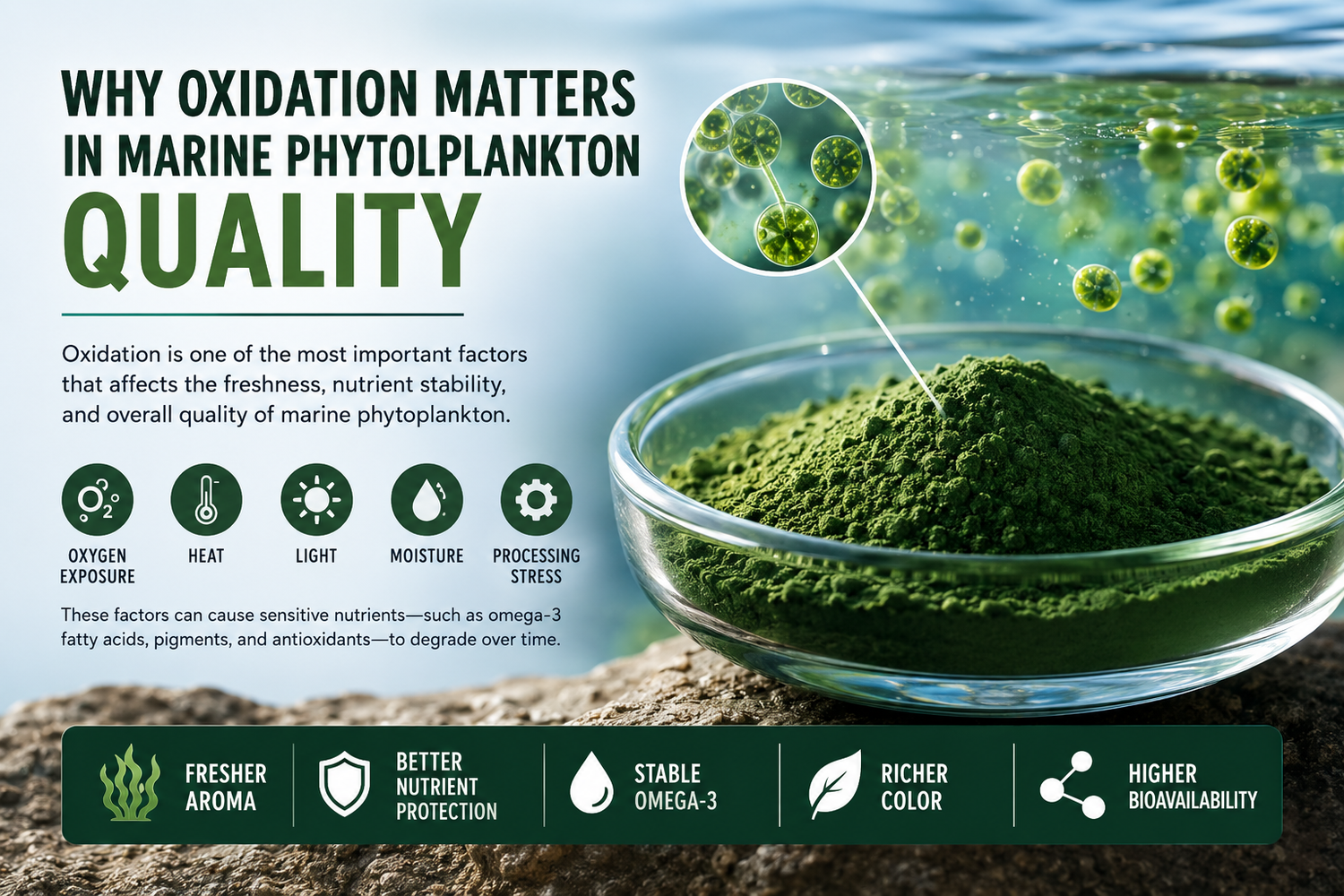
Oxidation is one of the most important — and least discussed — factors affecting freshness and nutrient stability in marine microalgae products.
If you are new to marine phytoplankton, you can also read our article about Marine Phytoplankton vs Spirulina vs Chlorella.
What Is Oxidation?
Oxidation is a natural chemical reaction that occurs when sensitive nutrients are exposed to:
- Oxygen
- Heat
- Light
- Moisture
- Processing stress
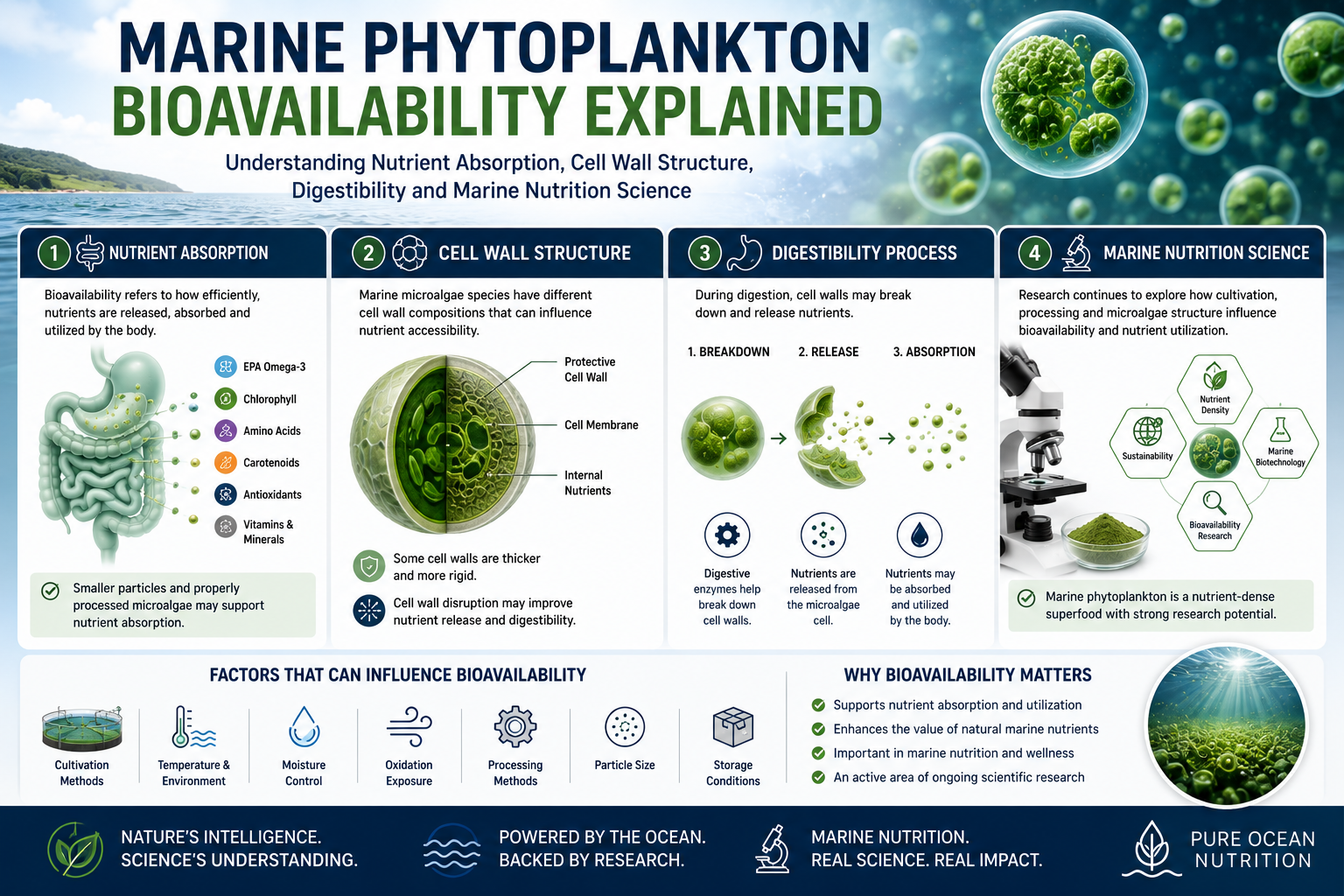
This is especially important because marine phytoplankton naturally contains delicate compounds such as omega-3 fatty acids, chlorophyll, antioxidants, carotenoids, and cellular lipids.
These compounds may gradually degrade over time when improperly handled or stored.
Many consumers choose Marine Phytoplankton Capsules because marine microalgae naturally contains a broad spectrum of nutrients and phytonutrients.
Why Marine Phytoplankton Is Sensitive
Marine phytoplankton is not an easy ingredient to produce.
The cells are extremely small and biologically active. Maintaining stable quality during cultivation requires careful control of:
- Light exposure
- Temperature
- Nutrient balance
- Water quality
- Harvest timing
- Drying conditions
- Oxygen exposure
Even small differences in production methods may influence the final nutritional profile.
This is one reason why marine phytoplankton products can differ greatly in color, smell, freshness, taste, and nutrient stability.
Open Raceway Systems vs Closed Photobioreactors
Some marine phytoplankton is cultivated in open raceway systems outdoors.
These systems can be more exposed to:
- Environmental contamination
- Temperature fluctuations
- UV exposure
- Oxygen stress
- Seasonal variation
Closed photobioreactor systems offer more environmental control and may help reduce oxidation stress during cultivation.
However, both systems require expertise to produce stable, high-quality biomass consistently.
You can also learn more in our article about Benefits of Marine Phytoplankton.
Drying and Processing Matter
One of the most critical stages is drying.
Excessive heat during drying may damage sensitive nutrients and accelerate oxidation.
Careful low-temperature processing and oxygen management are important factors in preserving freshness and nutritional integrity.
Improper storage after production may also accelerate degradation over time.
Why Color and Smell Can Vary
Consumers often notice that marine phytoplankton products vary in:
- Color intensity
- Smell
- Texture
- Taste
This can be influenced by:
- Species differences
- Harvest timing
- Moisture levels
- Processing methods
- Oxidation levels
- Storage conditions
Fresh, properly handled marine phytoplankton often maintains a deeper natural color and fresher marine aroma.
Why Stability Is Difficult
Producing stable marine phytoplankton at scale is difficult.
Unlike many standard supplements, microalgae production combines:
- Biology
- Agriculture
- Water chemistry
- Light management
- Food processing
- Oxidation control
This complexity is one reason why consistent quality production requires significant experience and process control.
If you want to explore marine microalgae products further, you can view our Marine Phytoplankton Powder.
Frequently Asked Questions
Why is oxidation important in marine phytoplankton?
Oxidation may influence nutrient stability, freshness, smell, color, and overall product quality.
Can omega-3 fatty acids oxidize?
Yes. Omega-3 fatty acids are sensitive compounds that may degrade when exposed to oxygen, heat, and light over time.
Why do marine phytoplankton products look different?
Differences in cultivation, harvesting, drying, storage, and species selection may influence color, texture, smell, and freshness.
Are closed photobioreactors better?
Closed systems may provide more environmental control, although both open and closed systems require expertise to maintain stable quality.