PCOS and Cortisol: The Hidden Stress Connection
PCOS is often discussed in relation to hormones and insulin resistance, but stress and cortisol are also becoming important topics within hormonal wellness research.
Many women with PCOS report feeling constantly tired, overstimulated, emotionally drained, or stuck in cycles of fatigue, cravings, poor sleep, and low energy.
Because of this, researchers and wellness experts are increasingly exploring the relationship between stress regulation, cortisol patterns, metabolism, inflammation, and hormone balance.
What Is Cortisol?
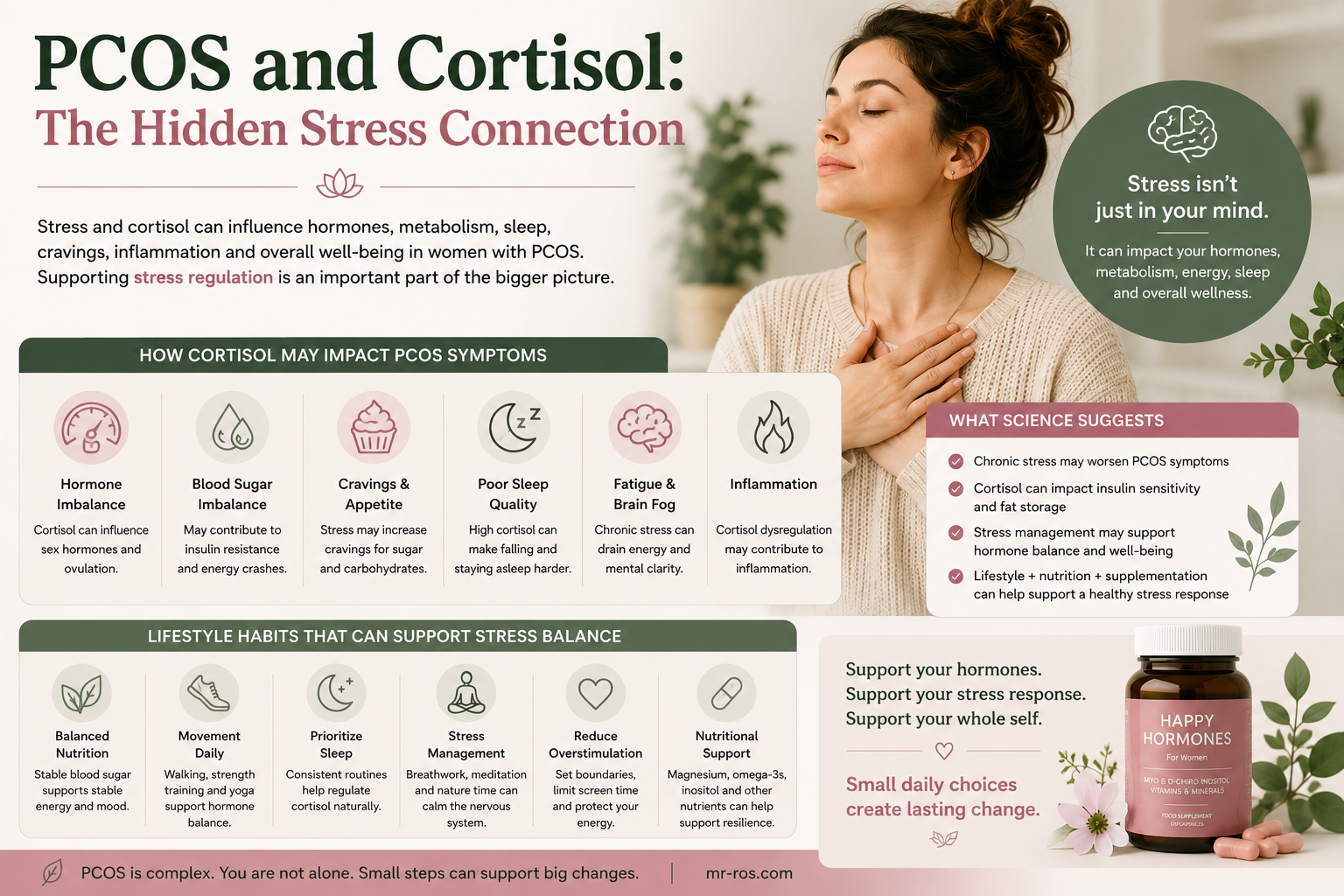
Cortisol is often called the body’s primary stress hormone. It plays an important role in energy regulation, metabolism, recovery, sleep-wake rhythms, and the body’s stress response.
Short-term cortisol increases are part of a normal healthy response. However, long-term stress and chronic dysregulation may affect multiple systems in the body over time.
Why Stress May Affect Women With PCOS Differently
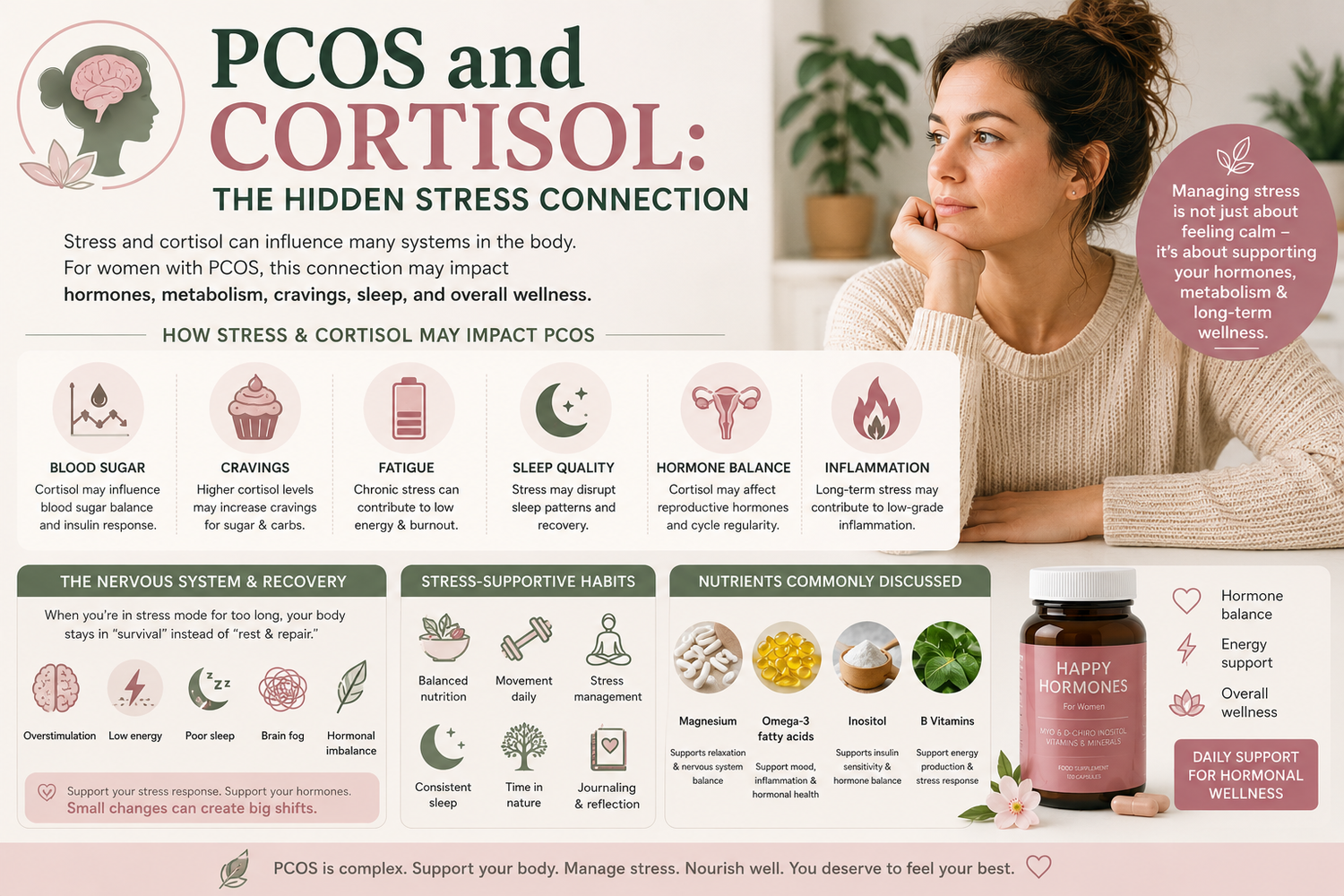
PCOS is a complex condition involving hormones, metabolism, inflammation, and energy regulation. Because these systems are closely connected, stress may influence symptoms in multiple ways.
Many women with PCOS discuss symptoms such as:
- Feeling “wired but tired”
- Difficulty relaxing
- Sleep disturbances
- Fatigue
- Brain fog
- Cravings
- Mood fluctuations
- Energy crashes
Although experiences vary, these symptoms are increasingly being discussed in relation to stress regulation and metabolic wellness.
You can also read our PCOS and Inflammation article.
Cortisol, Blood Sugar, and Cravings
Cortisol may also influence appetite, energy regulation, and blood sugar balance.
During periods of prolonged stress, some women report:
- More cravings for sugar or carbohydrates
- Inconsistent energy levels
- Fatigue after meals
- Difficulty maintaining healthy routines
- Poor sleep quality
This is one reason why stress management is increasingly viewed as part of broader metabolic and hormone wellness support.
Learn more in our PCOS Cravings article.
The Nervous System and Recovery
Modern wellness discussions increasingly focus on the nervous system and recovery capacity rather than hormones alone.
Long-term stress may affect:
- Sleep quality
- Recovery
- Energy levels
- Focus and concentration
- Hormonal balance
- Lifestyle consistency
Because of this, many women focus not only on nutrition, but also on recovery, stress reduction, movement, and sleep support.
Lifestyle Habits Commonly Discussed for Wellness Support
Women with PCOS often explore supportive habits such as:
- Balanced meals
- Consistent sleep routines
- Walking and movement
- Stress management practices
- Reducing overstimulation
- Nutritional support
Several nutrients are commonly discussed in relation to relaxation, recovery, and hormonal wellness, including magnesium, omega-3 fatty acids, and inositol.
You can also explore the science behind the 40:1 Myo-Inositol and D-Chiro-Inositol Ratio for PCOS.
Supporting Long-Term Hormonal Wellness
Many women with PCOS are now taking a broader whole-body approach that includes hormones, metabolism, inflammation, recovery, stress regulation, and nervous system support.
For daily hormone wellness support, explore our Happy Hormones for Women formula.
You can also browse our Women’s Supplements Collection.
Frequently Asked Questions
Can stress affect PCOS symptoms?
Stress is increasingly discussed in relation to energy levels, cravings, sleep quality, metabolism, and hormonal wellness in women with PCOS.
What is cortisol?
Cortisol is a hormone involved in stress regulation, metabolism, energy balance, and the body’s natural recovery systems.
Can cortisol affect cravings?
Stress and cortisol patterns may influence appetite, cravings, and energy regulation in some individuals.
Why do some women with PCOS feel overstimulated or exhausted?
Hormones, metabolism, sleep quality, stress, and recovery systems may all interact together and influence overall well-being.
What wellness habits are commonly discussed for stress support?
Sleep quality, balanced meals, movement, stress management, and nutritional support are commonly discussed as part of long-term wellness routines.