
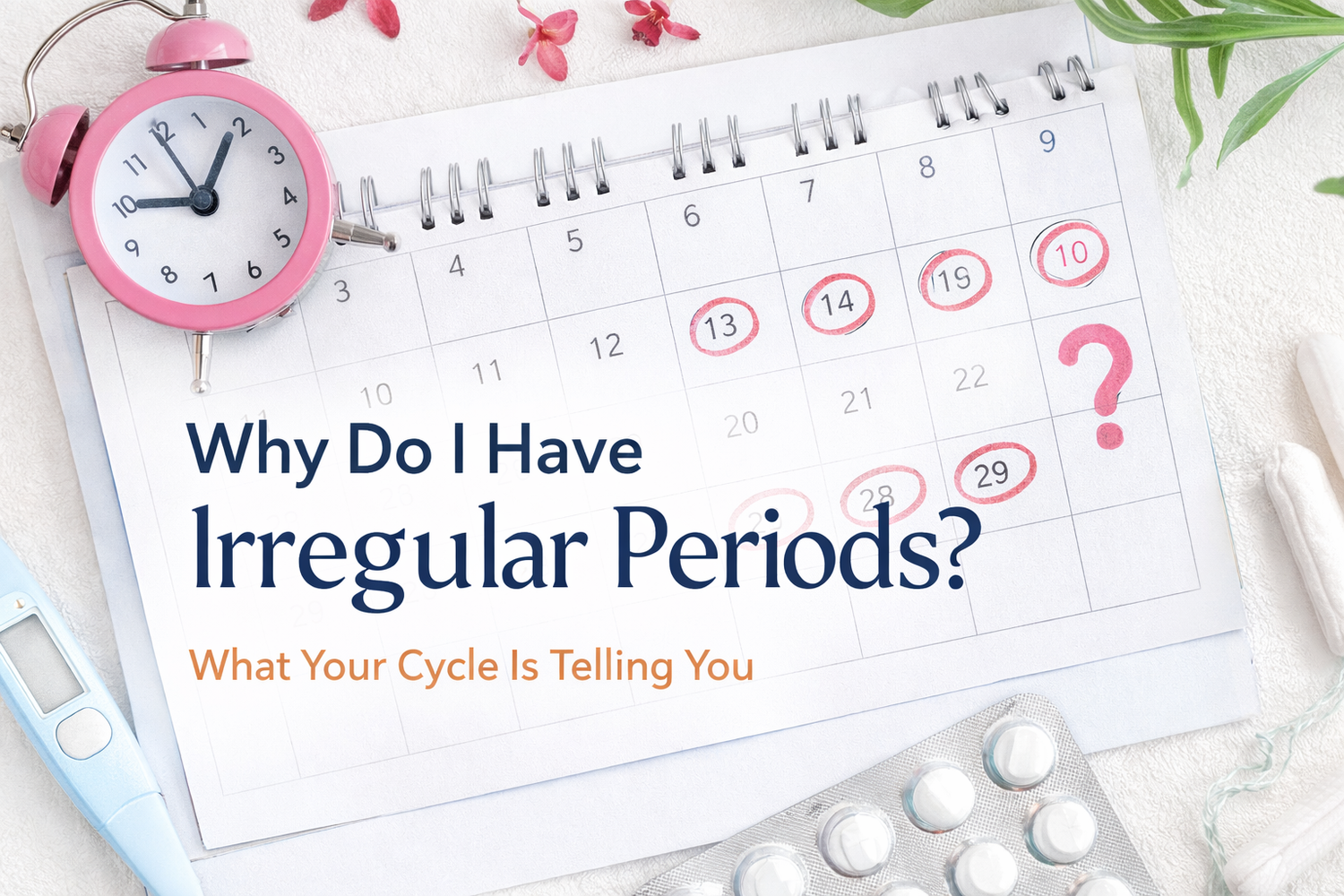
Why Do I Have Irregular Periods? What Your Cycle Is Telling You
Your period doesn’t come on time. Or it skips completely.
For many women, cycle changes are one of the first signs that something in the body is shifting. But because it’s common, it’s often ignored.
Your cycle is not random. It reflects what’s happening internally.
What is considered an irregular period?
A healthy cycle typically follows a pattern. When that pattern changes, it’s worth paying attention.
- Your cycle length changes frequently
- You skip periods
- Your period comes very early or very late
- Your flow is much lighter or heavier than usual
These changes can happen occasionally. But if they become consistent, your body may be signaling something deeper.
Common reasons for cycle changes
- Hormonal imbalance – Your cycle is driven by hormones working together
- Stress – Physical or mental stress can delay or stop ovulation
- Blood sugar instability – Fluctuations can affect hormone signals
- Weight changes – Rapid loss or gain can disrupt your cycle
- Lifestyle changes – Travel, sleep changes, or routine shifts
Why your cycle matters more than you think
Your period is not just about reproduction. It’s a monthly signal of your overall health.
When your cycle is irregular, your body may not be ovulating consistently. Over time, this can affect how you feel, your energy, and other symptoms.
What you can do right now
- Track your cycle for the next 2–3 months
- Notice patterns, not single events
- Pay attention to energy, mood, and physical changes
Patterns tell you more than isolated symptoms.
Looking at the bigger picture
Cycle changes rarely happen in isolation. They often appear together with other symptoms like fatigue, skin changes, or mood shifts.
If you want to understand how these symptoms may be connected, read the full overview:
Read the complete guide to symptoms
This article is for informational purposes only and is not medical advice.