Why Am I Always Bloated? Hormones, Digestion, and Hidden Patterns
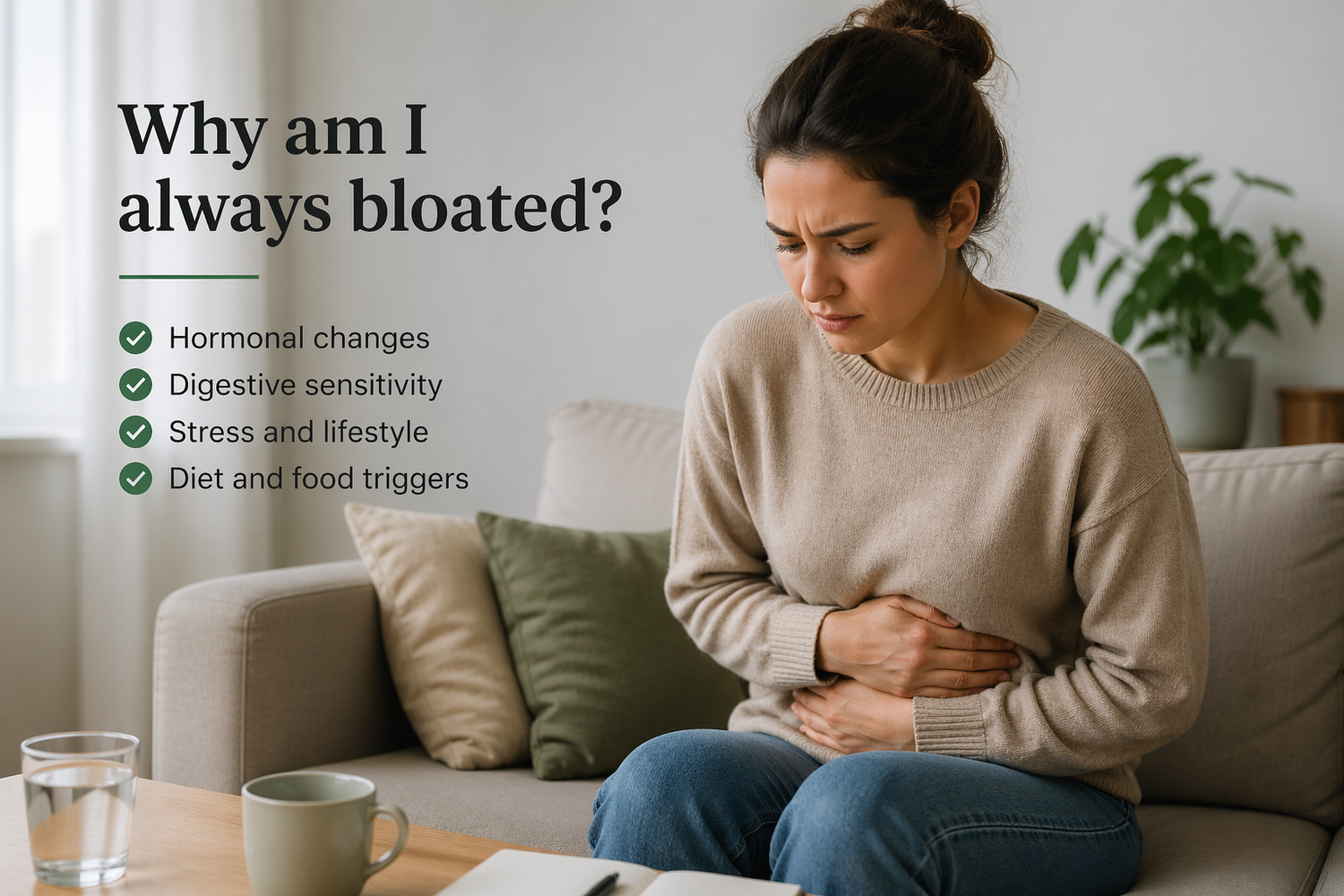
You eat normally, but your stomach feels swollen, heavy, or uncomfortable.
Bloating is common, but when it happens often, it may be a sign that your body is responding to something deeper.
For many women, bloating isn’t just about food — it can also relate to hormones, digestion, stress, and daily patterns.
What bloating can feel like
Bloating doesn’t look the same for everyone. You may notice:
- A swollen or tight stomach
- Feeling full quickly
- Pressure or discomfort after meals
- Changes throughout the day
- Bloating that gets worse before your period
These patterns can offer clues about what your body is responding to.
Common reasons for bloating
- Digestive sensitivity – Some foods may affect you more than expected
- Hormonal shifts – Hormones can influence water retention and digestion
- Stress – The gut and nervous system are closely connected
- Eating too quickly – Swallowing air or poor digestion can increase bloating
- Gut imbalance – Changes in digestion may affect comfort and regularity
Why bloating may not be random
If bloating happens repeatedly, it’s often worth looking for patterns rather than blaming one meal.
Ask yourself:
- Does it happen around your cycle?
- Is it worse after stress?
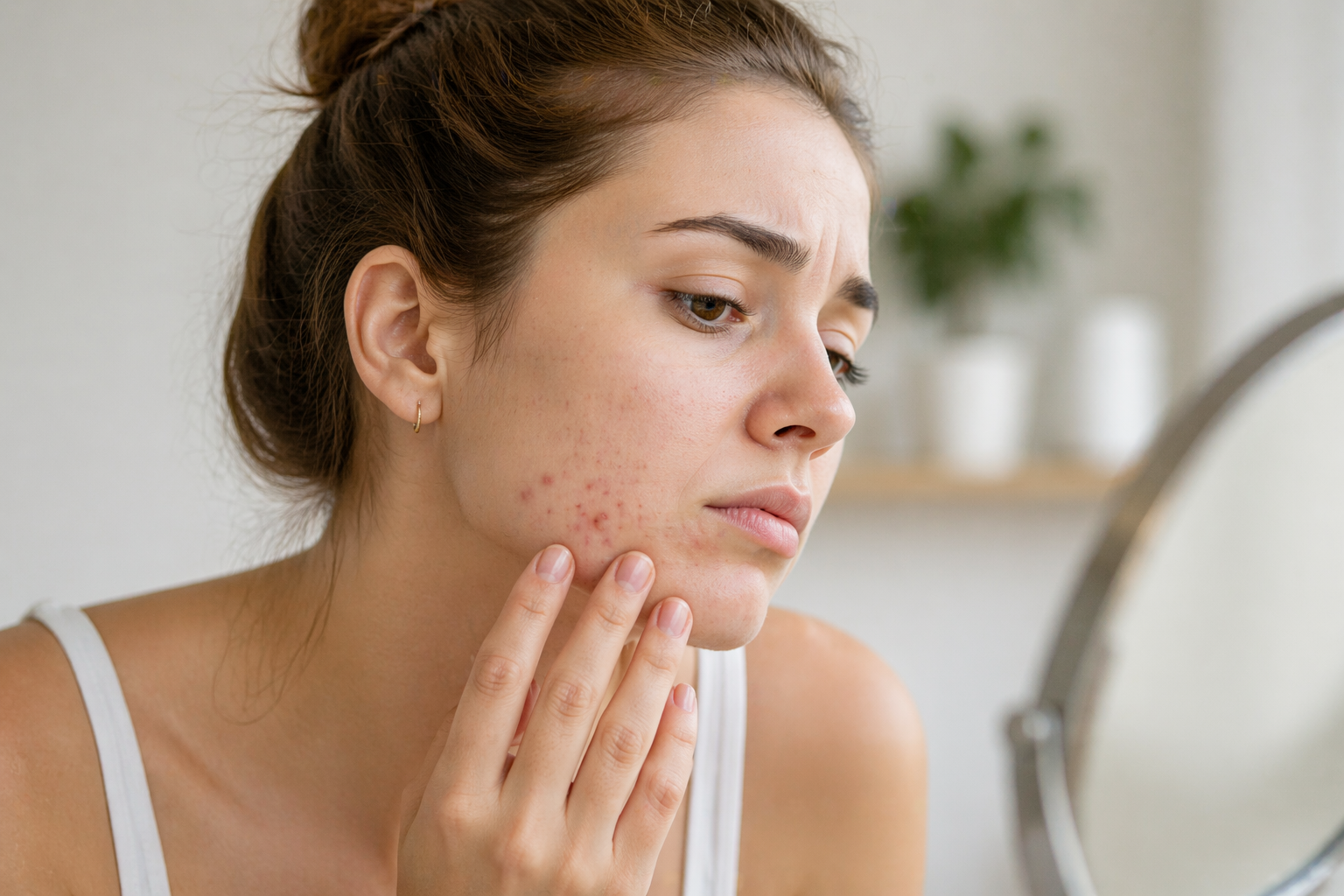
- Does it come together with fatigue or skin changes?
Symptoms often tell a bigger story when viewed together.
What you can do right now
- Track bloating for 1–2 weeks
- Notice timing (morning, evening, before period)
- Look for links with meals, stress, or sleep
- Focus on patterns, not isolated days
Awareness is often the first step toward understanding what your body is trying to tell you.
Get simple answers about your symptoms
Leave your email and we’ll send you clear explanations.
See Our Happy Hormones supplements
Bloating rarely happens on its own. You may also notice other changes happening in your body:
Looking at the bigger picture
Bloating often appears alongside other symptoms like fatigue, cycle changes, or skin issues.
If you want to understand how symptoms may be connected, read the full overview:
Read the complete guide to symptoms
This article is for informational purposes only and is not medical advice.