Marine Phytoplankton for Dogs: Why Some Pet Owners Use It
Marine phytoplankton is gaining attention among pet owners looking for alternative nutritional ingredients for dogs. As interest grows in natural omega-3 sources and microalgae nutrition, marine phytoplankton has become increasingly discussed in pet wellness communities.
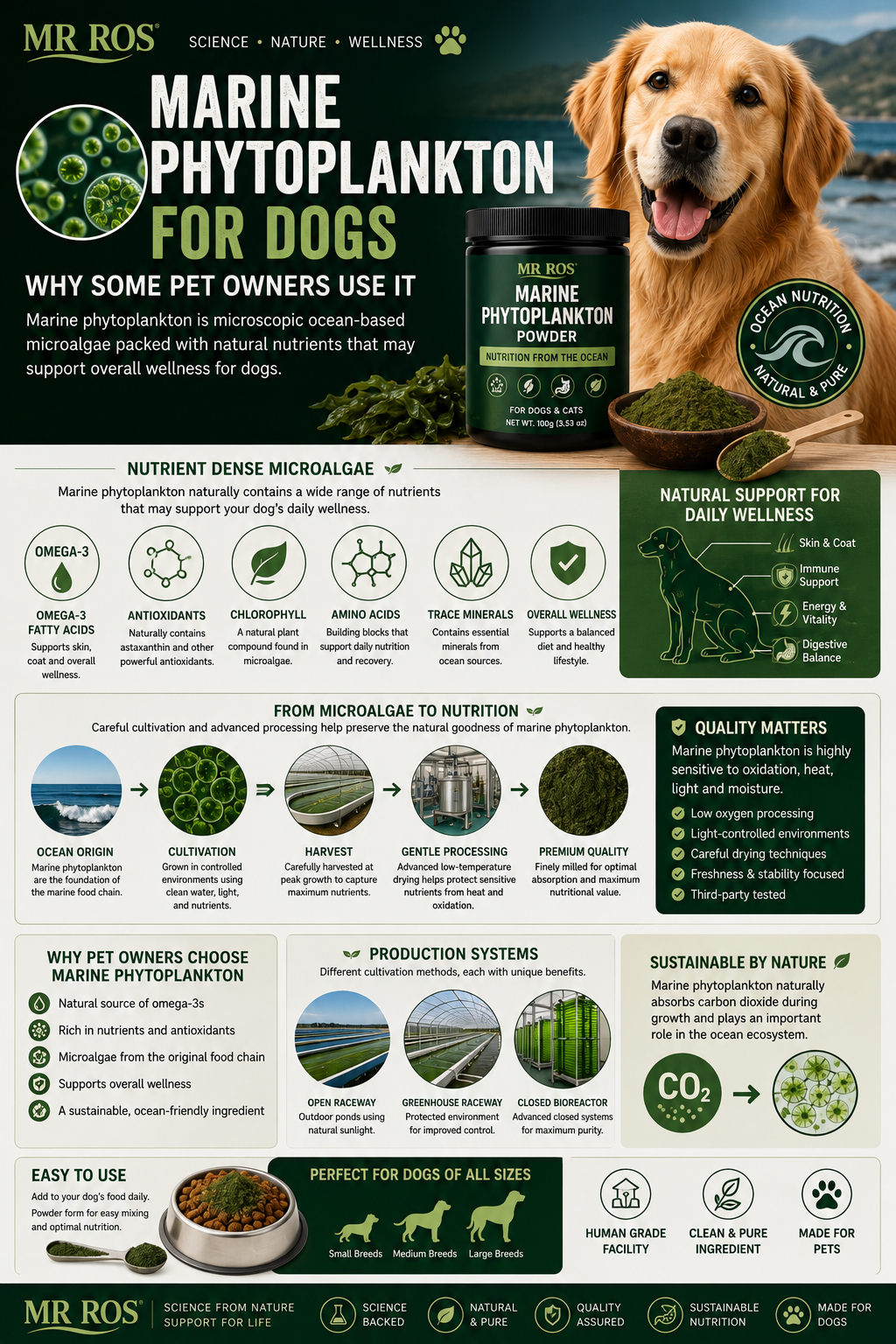
Many pet owners are interested in marine phytoplankton because it naturally contains omega-3 fatty acids, antioxidants, chlorophyll, carotenoids, amino acids, and trace minerals.
What Is Marine Phytoplankton?
Marine phytoplankton are microscopic ocean-based microalgae that form the foundation of the marine food chain. These tiny organisms are consumed by marine life throughout the ocean ecosystem.
Certain species of marine phytoplankton are cultivated for nutritional use because they naturally contain:
- Omega-3 fatty acids
- Chlorophyll
- Carotenoids
- Amino acids
- Trace minerals
- Antioxidants
Microalgae-based nutrition has become increasingly popular in both human and pet wellness products.
Why Some Dog Owners Use Marine Phytoplankton
Many dog owners are interested in marine phytoplankton as part of a broader wellness-focused feeding routine.
Common reasons pet owners explore marine phytoplankton include:
- Natural omega-3 nutrition
- Microalgae-based nutrients
- Daily wellness support
- Alternative marine nutrition sources
- Interest in ocean-based superfoods
Some pet owners also prefer marine phytoplankton because it is part of the original marine omega-3 food chain.
Marine Phytoplankton and Omega-3 Fatty Acids
Marine phytoplankton naturally produces omega-3 fatty acids that eventually move through the marine food chain into fish and other marine organisms.
This is one reason some pet owners explore microalgae as a direct marine nutrition source.
Omega-3 fatty acids are commonly associated with:
- Skin and coat support
- General wellness
- Daily nutrition support
- Balanced feeding routines
Why Production Quality Matters
Producing high-quality marine phytoplankton is extremely difficult. Product quality may vary significantly depending on cultivation methods, oxidation control, drying techniques, and storage conditions.
Marine phytoplankton is highly sensitive to:
- Heat exposure
- Oxidation
- Light exposure
- Moisture
- Processing conditions
This is one reason why marine phytoplankton production remains a specialized area within microalgae manufacturing.
Open Raceway vs Closed Bioreactor Production
Different marine phytoplankton production systems may influence product consistency and purity.
Common production methods include:
- Outdoor raceway systems
- Greenhouse raceway systems
- Closed photobioreactor systems
Each production method has different advantages and challenges involving contamination control, light exposure, scalability, and production costs.
Marine Phytoplankton and Sustainability
Microalgae cultivation is also gaining attention because marine phytoplankton naturally consumes carbon dioxide during growth.
Some advanced cultivation facilities use controlled systems that optimize light, carbon dioxide exposure, and nutrient management during production.
This has contributed to broader interest in algae cultivation technologies.
What Many Pet Owners Look For
When selecting marine phytoplankton products for dogs, many pet owners focus on:
- Production quality
- Freshness
- Storage stability
- Ingredient transparency
- Clean labeling
- Manufacturing standards
Due to the complexity of marine phytoplankton production, product quality differences may be significant.
Conclusion
Marine phytoplankton continues to gain attention among pet owners interested in microalgae nutrition and natural marine omega-3 sources.
As awareness grows around algae-based nutrition and production quality, marine phytoplankton remains one of the most unique and specialized ingredients in the broader pet wellness category.
FAQ
What is marine phytoplankton for dogs?
Marine phytoplankton is a microscopic ocean-based microalgae used in some pet wellness products for nutritional support.
Why do some pet owners use marine phytoplankton?
Some pet owners are interested in marine phytoplankton because it naturally contains omega-3 fatty acids, antioxidants, and trace nutrients.
Does marine phytoplankton contain omega-3?
Yes, certain marine phytoplankton species naturally produce omega-3 fatty acids.
Why does production quality matter?
Marine phytoplankton is highly sensitive to oxidation, heat, and processing conditions, which may affect product quality.
What production systems are used for marine phytoplankton?
Common systems include outdoor raceways, greenhouse raceways, and closed photobioreactor systems.