Best Ingredients Commonly Used in Dog Probiotics
Dog probiotics often contain a combination of beneficial bacteria, digestive support ingredients, and prebiotics designed to support gut balance and digestive wellness.
As pet owners become more focused on ingredient quality and transparency, understanding what is commonly used in dog probiotic supplements may help simplify the selection process.
What Are Dog Probiotic Ingredients?
Dog probiotic supplements typically contain live beneficial bacteria along with supporting ingredients that help maintain product stability and digestive support.
Common categories include:
- Probiotic strains
- Prebiotics
- Fiber sources
- Digestive enzymes
- Soft chew base ingredients
- Natural flavoring ingredients
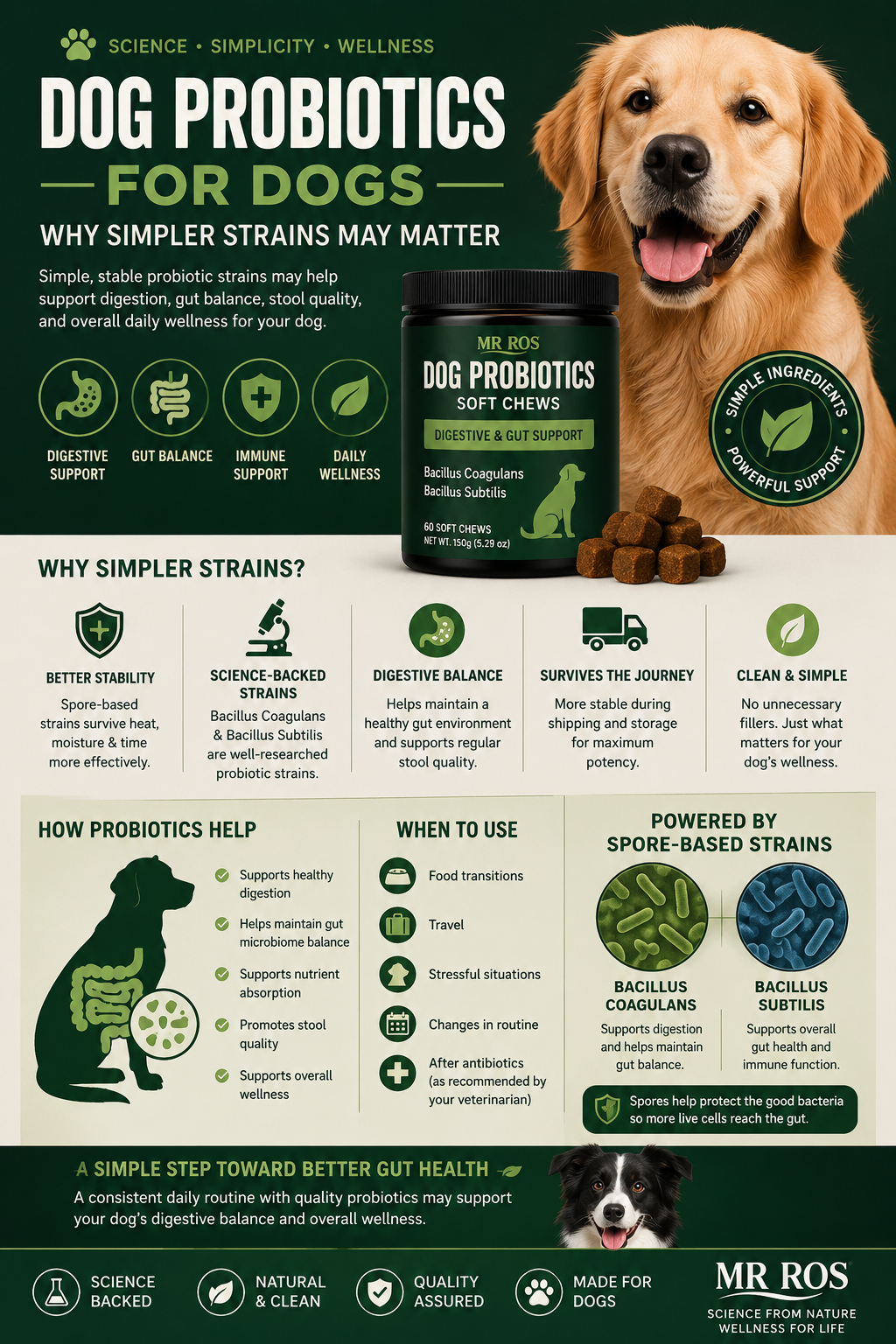
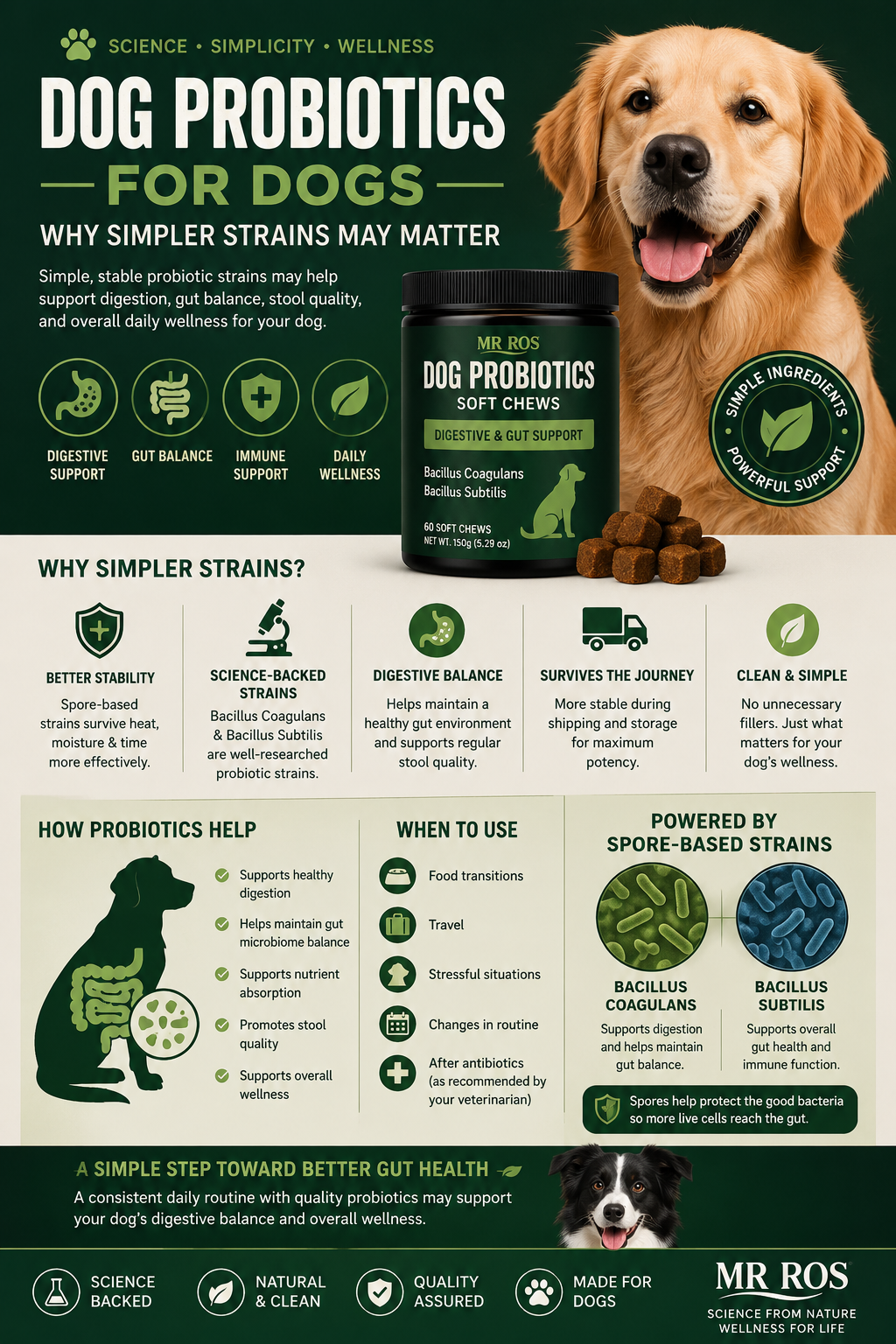
Bacillus Coagulans
Bacillus coagulans is one of the most commonly used probiotic strains in pet supplements.
This strain is popular because it forms protective spores, helping improve stability during storage and transportation.
Bacillus coagulans is commonly researched for:
- Digestive balance
- Gut microbiome support
- Stool quality
- Daily digestive wellness
Bacillus Subtilis
Bacillus subtilis is another spore-forming probiotic strain frequently used in dog supplements.
It is known for its durability and ability to survive environmental stress better than many fragile probiotic organisms.
This strain is often included in formulas focused on:
- Gut balance
- Digestive support
- General wellness
- Microbiome diversity
Prebiotics
Prebiotics are non-digestible fibers that may help support beneficial bacteria already present in the digestive system.
Common prebiotic ingredients used in dog supplements include:
- Inulin
- Pumpkin fiber
- Chicory root fiber
- Fructooligosaccharides (FOS)
Prebiotics are often combined with probiotics to create synbiotic formulas.
Pumpkin Powder
Pumpkin powder is commonly included in dog digestive supplements because it naturally contains fiber.
Pet owners often associate pumpkin with:
- Digestive support
- Stool consistency
- Dietary fiber intake
It is also widely used because dogs generally tolerate pumpkin-based ingredients well.
Digestive Enzymes
Some dog probiotic products include digestive enzymes to complement probiotic formulas.
Common digestive enzymes include:
- Protease
- Amylase
- Lipase
- Cellulase
These enzymes are commonly used in digestive support supplements for pets.
Why Stability Matters in Dog Probiotics
Many probiotic organisms are sensitive to heat, oxygen, and moisture. Product stability may affect how many live bacteria remain active over time.
Spore-forming probiotic strains are commonly preferred because they are naturally more resistant to:
- Heat exposure
- Humidity
- Shipping conditions
- Storage fluctuations
This may help maintain product quality during transportation and long-term storage.
What Many Pet Owners Look For
When choosing a dog probiotic supplement, many pet owners focus on:
- Simple ingredient lists
- Clearly listed strains
- Stable probiotic species
- Soft chew convenience
- Limited fillers
- Transparent labeling
Clean and focused formulations continue to become more popular in pet wellness products.
Conclusion
Dog probiotics often combine beneficial bacteria with digestive support ingredients and prebiotics designed to support gut wellness and digestive balance.
Stable strains such as Bacillus coagulans and Bacillus subtilis continue to grow in popularity because of their durability and practical use in everyday pet supplements.
FAQ
What ingredients are commonly used in dog probiotics?
Common ingredients include probiotic strains, prebiotics, digestive enzymes, and natural fiber sources.
What is Bacillus coagulans?
Bacillus coagulans is a spore-forming probiotic strain commonly used for digestive wellness support.
Why are spore-forming probiotics popular?
They are known for improved stability during storage, shipping, and digestion.
What are prebiotics for dogs?
Prebiotics are fibers that may help support beneficial bacteria already present in the digestive system.
Why does probiotic stability matter?
Stability may affect how many live probiotic organisms remain active until consumption.
Related Articles
- Dog Probiotics for Dogs: Why Simpler Strains May Matter
- Marine Phytoplankton for Dogs and Pets
- Explore the MR ROS Pets Collection